
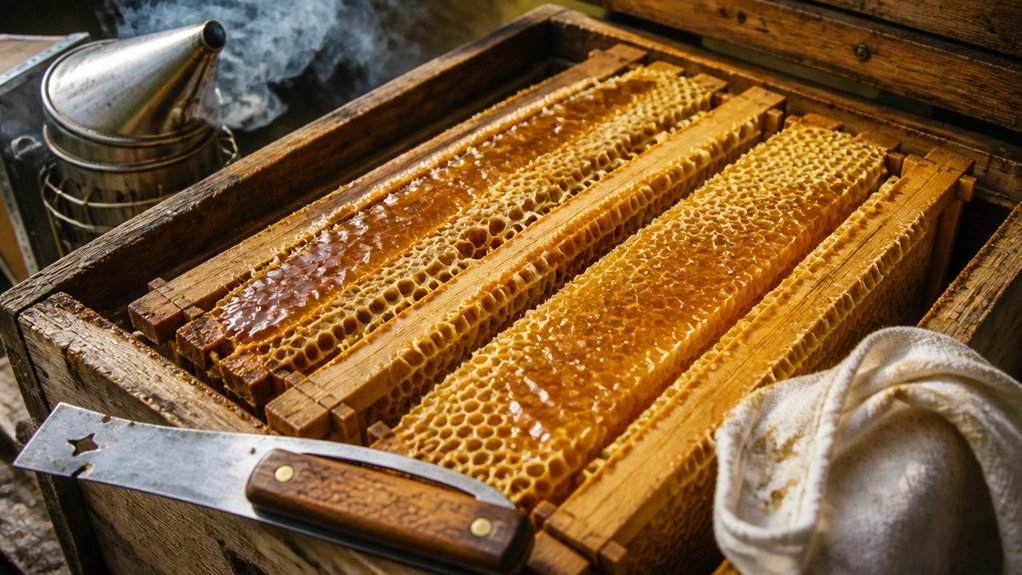
Check your hive first: harvest when most frames are capped, the comb feels heavy, and brood is mostly separate. Use the right gear, like a smoker, hive tool, bee brush, gloves, and a clean lidded bucket, so you work calmly and keep honey sanitary. Then uncap frames, spin them slowly, strain the honey through fine mesh, and bottle it in clean jars. Follow these steps, and you’ll see what makes harvesting smoother still.
How to Tell When Your Hive Is Ready
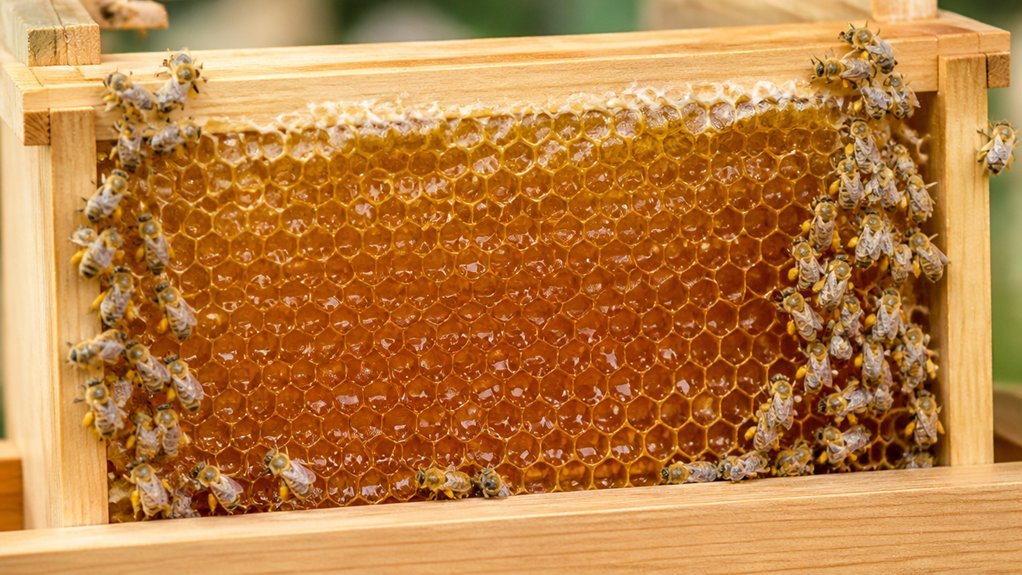
To tell when your hive is ready for harvest, check that most frames are capped with wax, since capped honey has the right moisture level for storage. You should also look for steady honey buildup across the comb, not just a few heavy cells.
If many frames still show open nectar, give the bees more time to dry and seal it. Watch the colony’s activity too; a busy hive with strong foraging often signals ongoing honey flow, so patience pays off.
Lift a frame carefully and compare its weight to earlier checks. When the comb feels dense, the caps look pale and uniform, and the brood area stays separate from the honey stores, you can plan your harvest with confidence.
Choose the Best Tools for Honey Harvesting
Once your hive looks ready, gather the right tools before you open it so the harvest stays clean and calm. You’ll need a smoker, hive tool, bee brush, gloves, and a bucket or tub with a secure lid. Choose stainless steel or food-grade plastic because they’re easy to sanitize and won’t taint honey.
Keep your gear in good condition; bent tools and cracked containers slow you down and invite mess. Wear lightweight protective clothing that lets you move well without overheating.
If you use a frame grip or uncapping knife later, test it first so you know it fits your setup. Pack everything within reach before you start, and you won’t waste time searching while bees get agitated. Using the right hive inspection tools helps keep the process efficient and minimizes stress on the bees.
Extract and Strain Honey Cleanly
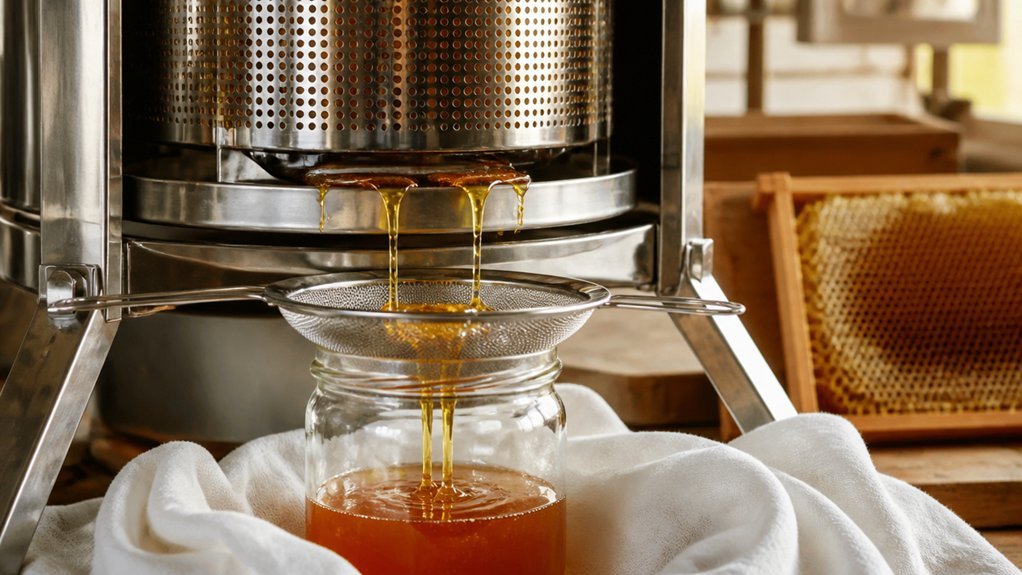
After you remove the frames, uncap the comb with a clean knife or uncapping fork and load them into your extractor as soon as possible. Spin the frames slowly at first, then increase speed so honey flies out without tearing comb. Keep the extractor level and close the lid to reduce splatter and contamination. Using a honey gate positioned at the bottom of the extractor helps ensure efficient drainage and minimizes honey loss. When the flow slows, reverse the frames and spin again to pull out the remaining honey. Strain the honey through a fine mesh or cheesecloth into a food-safe bucket to catch wax, bits of capping, and bee debris. Let it rest so air bubbles rise, then bottle it in clean jars. Work in a warm, dry room, and wipe every surface between batches to protect flavor and keep your harvest pure.
Frequently Asked Questions
How Often Should Honey Harvesting Be Done Each Year?
You should harvest honey once or twice a year, depending on your climate and nectar flow. You’ll avoid taking too much if you leave enough stores for the bees to survive winter safely.
What Weather Is Best for Harvesting Honey?
You’ll get the best results on a warm, dry, calm day, ideally late morning after bees have flown. Avoid rain, wind, and cold, since moisture and agitation make harvesting harder and messier.
How Do I Protect Bees During Harvest?
You protect bees by harvesting calmly, using light smoke sparingly, working quickly, and leaving enough honey for them. Close hives promptly, avoid crushing bees, and harvest during warm, dry, low-activity periods.
Can I Harvest Honey From a Weak Hive?
No—you shouldn’t harvest honey from a weak hive. You’ll stress the colony and reduce its winter stores. Wait until it’s strong, healthy, and has surplus comb before taking any honey.
How Should Harvested Honey Be Stored Safely?
Store your honey in clean, food-grade, airtight jars at room temperature, away from sunlight and moisture. You should label each batch, keep lids tight, and never refrigerate it unless you’re slowing crystallization.
In Summary
By watching your hive closely, choosing the right tools, and extracting carefully, you’ll make honey harvesting smoother and safer for both you and your bees. Don’t rush the process—wait until the comb is capped, work with gear that fits your setup, and strain your honey well for a clean finish. With a little patience and the right technique, you’ll enjoy a better harvest and help keep your colony healthy for the next season.



