You can manage aggressive queens three ways: spot the warning signs early, requeen at the right time, and prevent future problems with better queen care. Watch for fast, erratic movement, tense bee clusters, and workers that rush or sting during inspections. If the hive stays defensive, replace the old queen on a calm day and monitor the colony after a few days. Good handling and regular checks can keep your bees steadier, and there’s more to learn below.
How to Spot an Aggressive Queen Bee
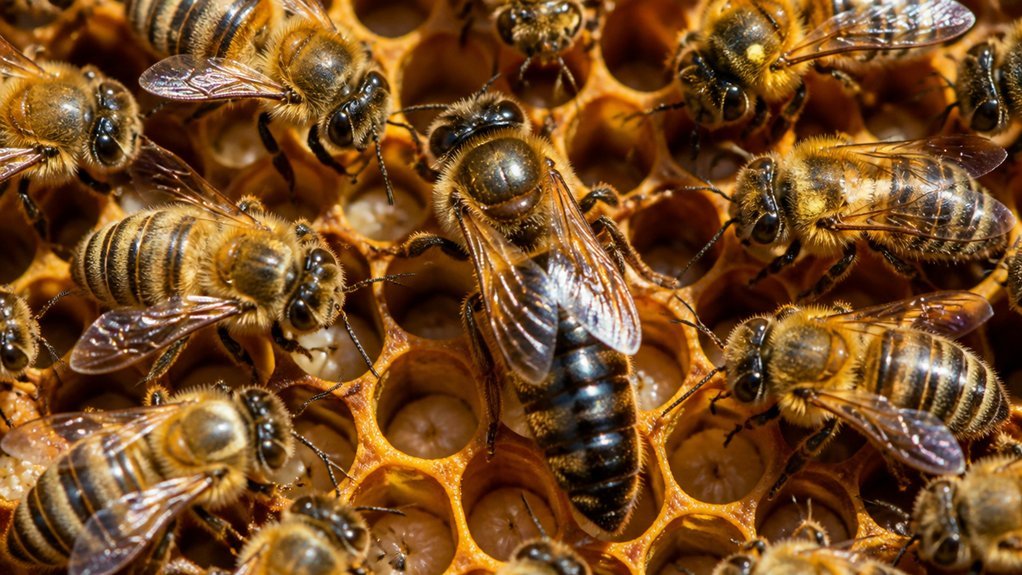
How can you tell if a queen is aggressive? You’ll often notice your colony reacting sharply when she’s present. Workers may rush across comb, buzz louder, and strike your gloves more quickly during inspections.
Look for a queen that moves fast, runs erratically, or gets surrounded by a tense cluster of bees. If you see frequent stinging attempts, heightened agitation, or workers following you aggressively after you open the hive, that can signal a problem.
Watch for a queen that runs erratically, draws a tense cluster, and sparks heightened agitation in the hive.
Pay attention to the overall mood of the colony, not just one bee. A calm queen usually supports steady behavior, while an aggressive one often seems to trigger restlessness.
Watch closely, stay calm yourself, and compare her colony’s response over several visits before drawing a conclusion. Incorporating queen marking kits can help you identify and monitor her more effectively over time.
When and How to Requeen a Hive
Sometimes the best fix is to requeen the hive, especially if the queen’s aggression keeps making inspections risky or the colony stays tense despite good management.
You should do it when stinging surges, brood patterns weaken, or workers seem nervous around every opening. Replace her during a calm day, wear full protection, and have a mated queen or ripe queen cell ready.
Remove the old queen first, then introduce the new one in a cage so the workers can accept her scent gradually. Check after several days for release and behavior changes.
If the hive still reacts strongly, you may need to repeat the process or combine the colony with a gentler one.
Act quickly, because aggressive colonies can escalate and make routine care harder.
Prevent Aggression With Better Queen Management
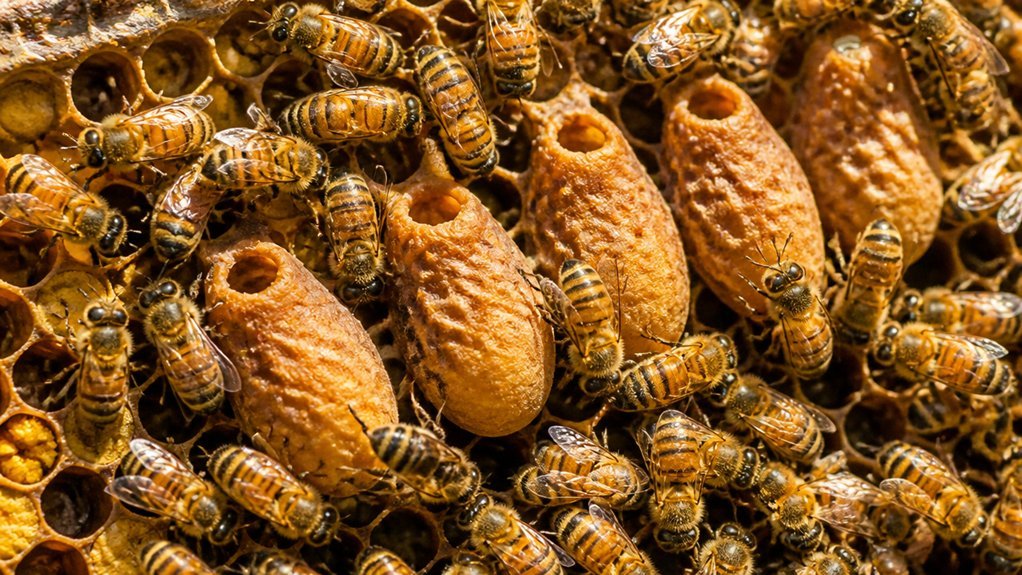
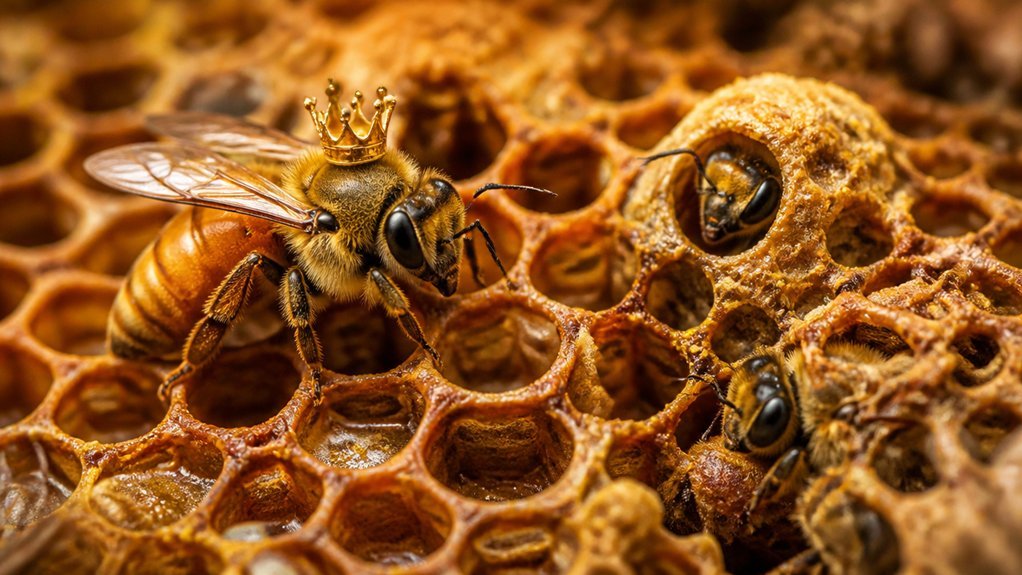
Good queen management can prevent a lot of aggression before it ever starts. You should monitor your queen’s age, laying pattern, and temperament, then act before problems spread through the colony. Mark each queen, inspect brood quality, and replace weak or erratic queens early. When you introduce a new queen, use calm conditions and give the hive time to accept her. Avoid rough handling, excessive smoke, and repeated disturbances, since these can amplify defensive behavior. Using properly designed queen cages can also reduce stress during introductions and promote smoother acceptance.
Frequently Asked Questions
Can Aggressive Queens Affect Honey Production?
Yes, aggressive queens can hurt honey production because you’ll spend more time managing defensive colonies, and your bees may forage less efficiently. You can reduce losses by requeening, improving hive conditions, and checking stress factors regularly.
Will Smoke Calm an Aggressive Queen Bee?
No, smoke usually won’t calm an aggressive queen bee. You’ll mostly soothe the workers instead. Handle her gently, keep inspections brief, and replace her if she keeps triggering defensiveness or poor colony performance.
Are Aggressive Queens More Likely to Swarm?
Not necessarily; you’ll see swarming more from colony pressure, congestion, and queen status than aggression alone. Still, if you’re handling a hot colony, watch closely, because aggressive genetics can make swarm management tougher.
How Long Does a New Queen Take to Settle In?
A new queen usually settles in within a few days to two weeks, but you’ll want to watch closely. She may take longer if the colony’s stressed, small, or still adjusting to her scent.
Can a Queen Bee Become Aggressive After Injury?
Yes, she can become aggressive after injury because pain, stress, or reduced mobility may make her act defensively. You’ll notice altered behavior, so inspect her carefully and manage the colony gently.
In Summary
In the end, managing an aggressive queen comes down to watching your hive closely, acting quickly, and making smart replacement choices. If you spot angry behavior, don’t wait too long to requeen before the colony becomes harder to handle. With regular queen checks and better queen management, you can keep your bees calmer, healthier, and more productive. Stay alert, trust what you see, and give your hive the steady leadership it needs.