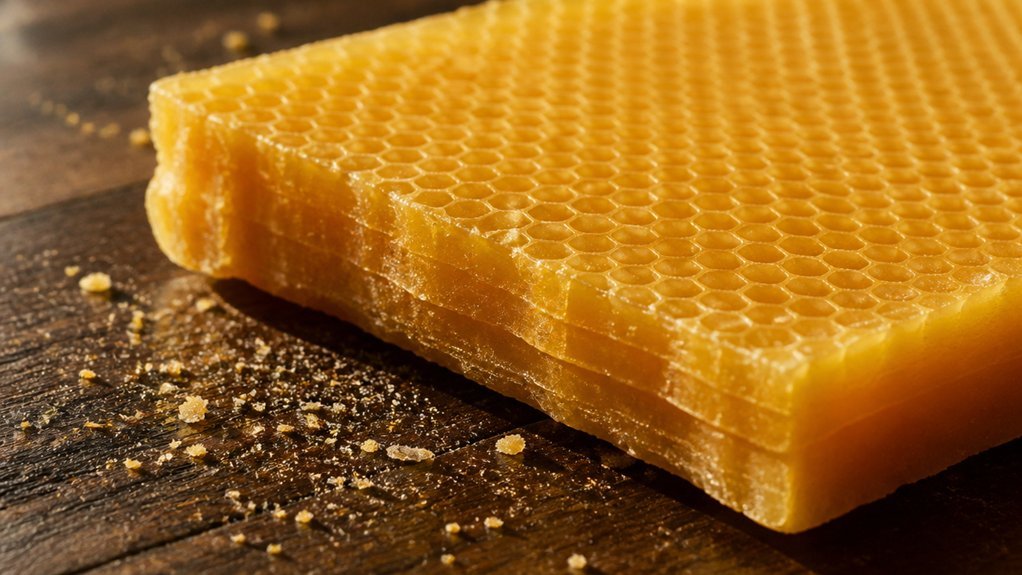
Choose a site with morning sun, afternoon shade, and steady airflow, then place hives near trees, fences, or sheds that block harsh heat without trapping damp air. Keep entrances clear, facing an open flight path, and raise colonies off hot ground on sturdy stands. Provide reliable water with landing aids, and check for heat stress, pests, and seasonal shade changes. Before you set up, confirm local rules too, because a few smart details can make summer management much easier.
Choose the Best Hot-Climate Site
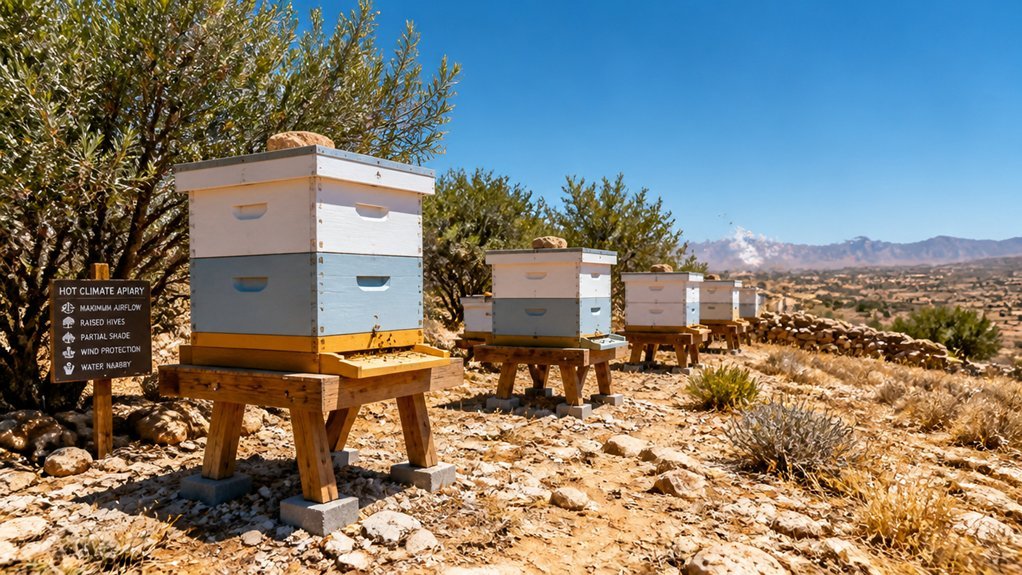
Pick a site that gives your bees morning sun, afternoon shade, and steady airflow, because in hot climates that balance helps the hive stay cooler and more productive. A raised hive stand can further improve drainage and ventilation, keeping moisture levels down and preventing damp-related issues. You should place hives where tall trees, fences, or buildings block the harshest afternoon heat without trapping still air. Choose well-drained ground so rain doesn’t puddle around the stand, and keep the entrance clear of dense brush that can slow traffic and invite pests. Face the hive entrance away from prevailing hot winds if they dry the colony too much. You’ll also want easy access for inspections, yet enough distance from heavy foot traffic so your bees don’t get disturbed. Scout the area at midday, when heat stress shows the site’s true conditions best.
Plan Year-Round Water Access
Water is just as important as shade, so set up a reliable source near the apiary and keep it available all year. You can use a stock tank, shallow tub, or dripper, but always add landing aids like corks, pebbles, or rough stones so bees won’t drown. Using non-toxic, lightweight, durable materials helps protect pollinators and ensure long-lasting use. Refill it before it runs dry, especially during heat waves when foragers need more water to cool the hive and dilute food stores. Check the water daily in summer and weekly in milder months, and clean it often to prevent algae, mosquitoes, and foul odors. If your area freezes, switch to a heated or insulated setup so bees still have access in winter. Place the source close enough that they can find it easily and won’t have to search far.
Map Shade, Wind, and Morning Sun
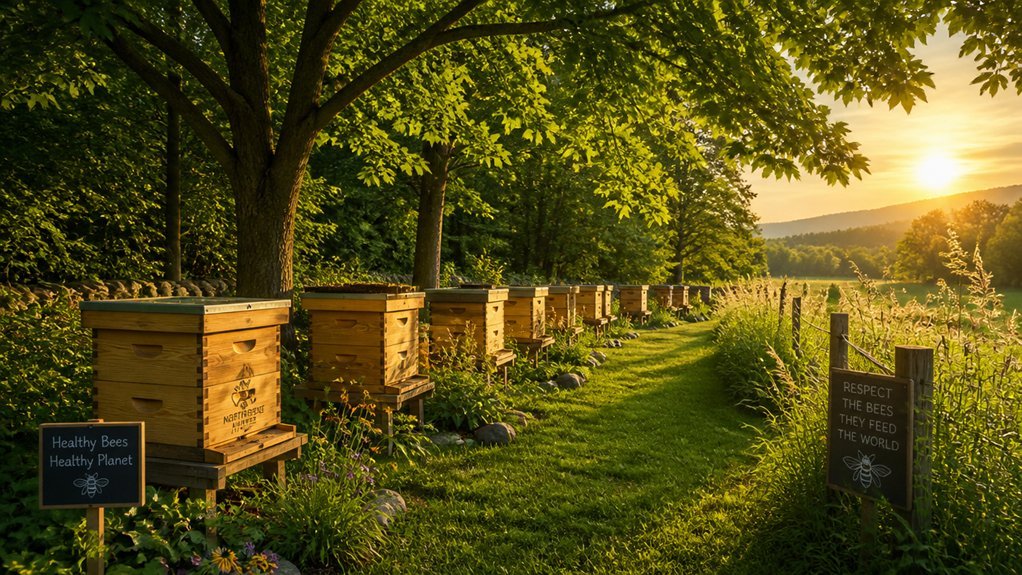
You’ll want to map shade patterns across your apiary site so you can spot where heat builds up during the day. Check that your hives still get morning sun, since early light helps warm them before the hottest hours hit. Also note how wind moves through the area, because a well-placed windbreak can reduce stress without blocking needed light. Additionally, considering hive insulation can help maintain stable internal temperatures and improve winter survival.
Shade Patterns
Before you set a hive in a hot climate, map the shade through the day so you know exactly when the bees will get relief and when they’ll take the full sun. Walk the site at dawn, noon, and late afternoon, and note where trees, fences, or buildings cast cover.
You want shifting shade that softens heat without trapping damp air.
- Choose partial shade that protects the hive box from harsh afternoon rays.
- Avoid deep, all-day darkness that can slow traffic and raise moisture.
- Watch how wind threads through shaded spots, since moving air helps the hive stay cooler.
- Consider responsible wood sourcing, as high-quality, sustainably harvested cedarwood offers better insulation and durability in hot climates.
Mark those pockets on a simple sketch, then place hives where shade and airflow work together.
Morning Sun Access
Once you’ve mapped shade, check how the site catches the morning sun, because a hive that warms early gets bees moving sooner and can dry out overnight moisture. A proper finish on hive box exterior surfaces, such as a durable, long-lasting stain or paint, can also help resist weathering and moisture buildup, supporting hive health. In hot climates, place entrances where they receive direct light in the first hours of day, then shift into shade as temperatures rise. You’ll help bees start foraging earlier, ventilate the colony faster, and reduce dampness that can encourage disease. Watch nearby trees, fences, and buildings, since they can block weak morning light or create cold pockets. If wind funnels across the opening, add a barrier that won’t block sun. Aim for bright dawn exposure, not all-day baking. That balance gives your bees a quick start without turning the apiary into an oven by noon.
Keep Hives Off Hot Ground
You should raise your hive bases so hot soil doesn’t radiate extra heat into the boxes. Set them on shaded supports whenever you can, and keep airflow moving underneath. This helps prevent ground heat from building up and stressing the colony. Additionally, using premium woods like cedar can further enhance the hive’s resistance to heat and environmental stress.
Raise Hive Bases
If your apiary sits in a hot climate, raise hive bases so the colonies stay off scorching ground. You give each hive a buffer against heat that radiates upward from concrete, bare soil, and rock.
Use sturdy stands, blocks, or pallets that keep the bottom board level and stable. Aim for enough clearance to improve air movement beneath the hive without making inspections awkward. Check each base after rain or shifting soil so it doesn’t tilt or sink.
Keep the setup simple, strong, and easy to move if needed.
- Lift hives a few inches at minimum.
- Match base height across the apiary.
- Recheck stability after storms or heat cycles.
- Incorporate ergonomic handle features to assist in lifting and repositioning hives easily.
Use Shaded Supports
Use shaded supports to keep hive stands, pallets, or blocks from baking in direct sun and transferring heat into the colony. You can place them under a shade tree, beside a fence, or under a simple roofed cover that blocks afternoon sun.
Choose materials that stay cool, like treated wood, concrete, or metal with a light finish, and avoid dark surfaces that soak up heat. Keep support legs level so the hive sits steady and air can move beneath it.
If you use cinder blocks, set them where the shade lasts through the hottest part of the day. Shaded supports won’t cool the hive by themselves, but they reduce radiant heat from below and help your bees conserve energy on scorching days. Proper inner cover ventilation can also improve airflow and moisture control inside the hive during hot weather.
Prevent Ground Heat
Hot ground can turn hive bottoms into heat radiators, so keep colonies lifted well above bare soil, asphalt, or concrete that bakes in the sun. Use sturdy stands, pallets, or blocks to create an air gap that breaks heat transfer and lets breezes cool the hive base. You’ll also protect the wood from moisture and pests. Adding high-strength straps can help secure these stands or blocks firmly in place, ensuring stability during wind or storms.
- Set hives on legs at least 12 inches high.
- Add gravel or mulch beneath stands to reduce reflected heat.
- Check that no part of the hive rests directly on sunwarmed pavement.
If you must place hives on hardscape, move them to the coolest edge and provide morning shade. Elevation and airflow work together, so don’t let the ground become an unseen heater.
Face Entrances for Easy Flight Paths
When you face hive entrances toward the clearest open flight path, you give foragers a direct line in and out, which helps them move faster and with less confusion. Aim each entrance away from tall grass, fences, and busy walkways so bees don’t waste energy dodging obstacles. You can use landmarks to orient colonies, but keep the lane straight and obvious. A properly fitted robbing screen can further prevent disruptions by blocking intruders and maintaining efficient hive traffic.
| Choice | Effect |
|---|---|
| Open direction | Speeds takeoff |
| Clear sightline | Reduces collisions |
| Low clutter | Eases traffic |
| Simple approach | Saves energy |
| Consistent angle | Helps orientation |
Check your setup from a bee’s eye view, then adjust until the path feels clean. In hot weather, every extra turn costs time and raises stress, so keep the route short, direct, and easy to read.
Space Hives for Heat and Airflow
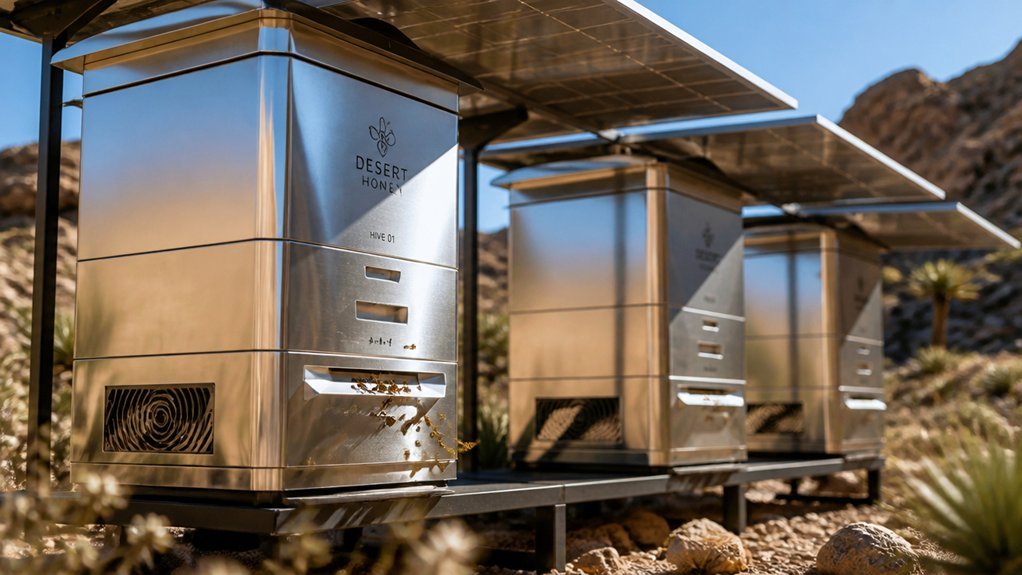
Give each hive enough breathing room so heat doesn’t build up and stale air can’t linger between colonies. You should leave wide gaps between boxes so air can move freely around them and bees can vent excess warmth without crowding.
Set hives in a single, orderly line or staggered pattern, and keep enough space to walk, inspect, and manage them safely. Crowded apiaries trap heat, slow foragers, and make moisture hang inside hive bodies.
- Aim for at least one hive width between colonies.
- Keep entrances unobstructed so airflow stays smooth.
- Leave clear lanes for your tools, carts, and quick checks.
When you spread colonies out, you help each one regulate its own temperature and reduce stress during hot spells.
Protect Hives From Afternoon Sun
Afternoon sun can push hive temperatures up fast, so place colonies where they get morning light but some relief from the harshest western exposure. You can use trees, shrubs, a fence, or a simple shade cloth to break the late-day blast without keeping the hive damp or dark all day.
Aim for dappled shade after noon, especially during the hottest months. Watch how the sun moves across your site, because a spot that looks fine at dawn may bake by 3 p.m. If you move hives, do it before peak heat so bees can reorient in cooler conditions.
You should also check seasonal shade changes, since leaf cover shifts and can expose colonies later in the year.
Avoid Heat Traps and Reflective Surfaces
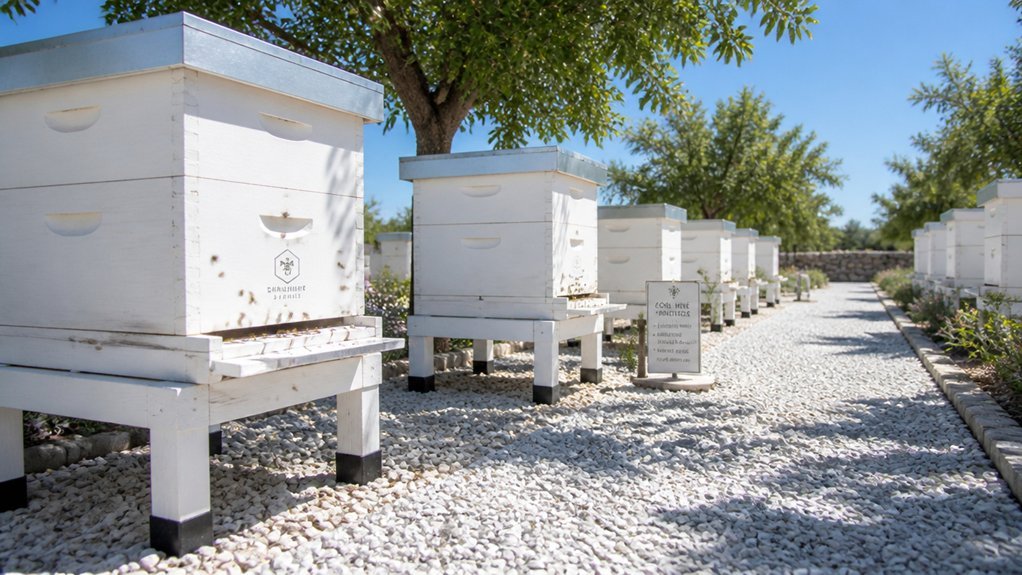
Skip low spots, tight corners, and hard surfaces that can trap heat around your hives. You want moving air, not a pocket of radiating warmth, so place colonies where breezes can pass and shaded ground stays cooler. Avoid setting hives beside concrete pads, metal roofs, rock piles, or pale walls that bounce sunlight back at the boxes. Those surfaces can raise temperatures fast and force bees to spend more energy cooling.
Avoid heat traps near hives; choose breezy, shaded ground, and skip reflective hard surfaces that bake the boxes.
- Choose bare soil, grass, or mulch near the stand.
- Keep entrances away from bright reflective edges.
- Check nearby surfaces at midday, not just morning.
When you scout a site, kneel down and feel the heat around you. If the area feels hot to you, it’ll stress your bees too.
Use Fences, Trees, and Sheds Wisely
Fences, trees, and sheds can help with heat management when you place them with care. You should use them to break harsh sun and steady wind without blocking all airflow. A light fence can soften gusts, while a tree line can cast afternoon shade. Keep hives a safe distance from roots, clutter, and dripping branches. A shed wall can work too, but don’t crowd the entrance or trap moisture.
| Feature | Benefit | Watch For |
|---|---|---|
| Fence | Cuts wind | Too close to hives |
| Tree | Adds shade | Falling limbs |
| Shed | Blocks sun | Stale air |
| Hedge | Softens heat | Pests |
| Open gap | Lets air move | Full exposure |
Check shade patterns through the day, and adjust placement if the site stays damp, dark, or stuffy.
Place Hives Near Nectar Sources
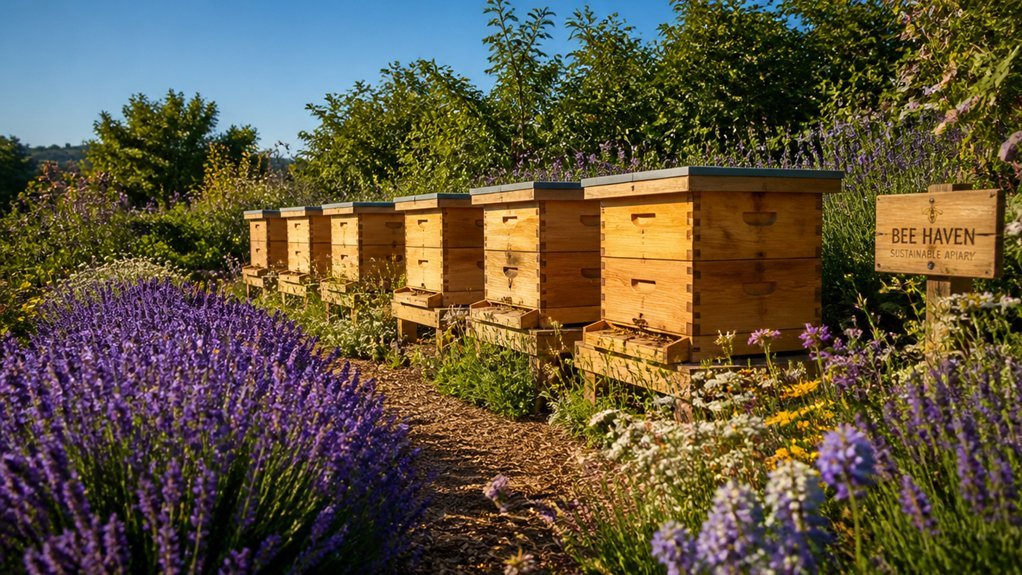
When you site hives near strong nectar sources, your bees spend less energy flying and more time bringing in food. In hot weather, that efficiency matters because every extra trip costs water, fuel, and brood-rearing time.
Place colonies within easy reach of bloom cycles, whether you’re working citrus, clover, mesquite, or native wildflowers. Check what flowers open first, what follows next, and how far your bees must travel. Keep a simple map so you can shift apiaries when nectar wanes.
- Put hives close to current bloom, not just pretty scenery.
- Stagger locations to match seasonal nectar flow.
- Watch forage quality, since weak blooms won’t sustain strong colonies.
Improve Airflow Around Your Hives
Good forage helps your bees bring in nectar, but hot weather puts just as much pressure on how well they can cool the hive. You can help by giving each hive space for air to move freely on all sides.
Set hives where breezes can reach them, not in tight corners, dense hedges, or dead-air pockets. Raise them slightly off the ground so moisture and heat don’t build up underneath. Keep entrances clear and face them toward the prevailing wind when possible.
Trim grass, weeds, and low branches nearby so they won’t block airflow. If you group colonies, leave enough room between stands for heat to escape. Good ventilation won’t replace shade, but it can lower stress and help your bees regulate temperature more efficiently.
Watch for Hot-Weather Hive Pests
Hot weather can also bring out pests that add stress to already struggling colonies, so check your hives more often during heat waves. You’ll spot trouble sooner if you watch entrances, brood frames, and discarded debris for signs of ants, wax moths, or small hive beetles.
Hot weather can also bring out pests, so check your hives more often during heat waves.
Heat weakens colonies, and pests exploit that gap fast, especially when comb is exposed or robbing pressure rises. Keep a close eye on weak hives because they’re often first to suffer.
- Look for ant trails under stands and around hive legs.
- Check for slime, larvae, or chewed comb in shaded corners.
- Remove dead-outs, burr comb, and spilled honey quickly.
Adjust Hive Placement by Season
As the seasons shift, you should move or reposition hives to match changing sun, shade, and wind exposure.
In spring, give colonies more morning light so they warm up quickly and start foraging sooner. As summer peaks, shift them toward afternoon shade or place a barrier where direct sun hits hardest.
In fall, return hives to brighter spots so they dry faster after cool, damp nights. In winter, block harsh winds and keep entrances out of low, stagnant air. You can also turn hive fronts to catch gentle breezes when temperatures climb.
Make each move gradually, and keep the landing board stable so bees don’t waste energy readjusting. Check nearby trees, buildings, and fence lines each season, because their shadows and airflow change too.
Spot Heat Stress Fast
You can spot heat stress fast by watching how your bees behave at the entrance and inside the hive. When temperatures climb, you’ll see more fanning at the doorway, bees clustering outside, and fewer foragers moving with purpose.
Watch for more fanning at the entrance, bees clustering outside, and fewer foragers when heat stress builds.
Inside, frames may look crowded near the top bars, and brood area activity can seem restless. Check for these signs at the hottest part of the day, not just in the morning.
- Bees hang in a beard outside the entrance.
- Workers fan hard to push out warm air.
- Brood comb looks patchy or overheated.
If you notice these signals, act quickly with shade, airflow, or a water source nearby. Fast attention helps you protect brood, reduce stress, and keep the colony working smoothly.
Follow Local Rules Before You Set Up
Before you set up your apiary, check your local ordinances so you know what’s allowed in your area.
You’ll also need to secure any required permits before bringing in bees. Taking care of these rules early can help you avoid fines and delays.
Check Local Ordinances
Where can you legally place your apiary? Start by checking your city, county, and HOA rules before you move hives into a hot-climate yard. Local ordinances can set setback distances, limit hive counts, or require screening from neighbors and roads.
You should also confirm whether water access, fencing, or flight-path placement must meet code. Hot weather makes bees travel farther for water, so a compliant site helps you avoid complaints and fines.
- Review zoning maps and animal ordinances.
- Ask code enforcement about any hive restrictions.
- Check nuisance rules for noise, swarms, and property lines.
When you know the rules, you can choose a lawful spot that keeps bees safe, calm, and better suited to heat.
Secure Required Permits
Once you’ve confirmed local rules, pull the permits or registrations your area requires before you set hives in place. Contact your county office, agricultural department, or city clerk and ask which forms apply to beekeeping, hive counts, and property setbacks.
Some areas want annual registration, proof of apiary location, or notice to neighbors. Keep copies of every approval, receipt, and map with your hive records so you can show compliance quickly if someone asks.
If you’ll move hives across boundaries, check transport and quarantine rules too. Don’t assume a rural site is exempt; hot-climate regions often tighten oversight near schools, parks, or livestock.
Getting paperwork done early helps you avoid fines, delays, and forced relocation later.
Frequently Asked Questions
How Do I Relocate Hives Safely During Extreme Heat?
Move hives after sunset, seal entrances, strap boxes, and ventilate the truck well. Keep them shaded, drive smoothly, and set them down promptly. Check for overheating, then reopen entrances at dawn.
What Hive Materials Hold up Best in Hot Climates?
You’ll do best with insulated wood, coated plywood, or high-density plastic hives; they resist warping and shed heat well. Choose light-colored paint, metal roofs, and screened bottoms, and avoid thin untreated pine in harsh sun.
How Often Should I Inspect Hives During Heat Waves?
Inspect hives every 3–5 days during heat waves, and check sooner if you spot bearding, reduced flight, or melted comb. You’ll catch trouble early, adjust ventilation, and keep colonies from overheating or starving.
Can I Use Artificial Shade Cloth Over Bee Colonies?
Yes, you can use shade cloth, and you should if it reduces direct sun. You’ll want airflow, clearance above the hive, and secure support so heat doesn’t trap inside or block bee traffic.
What Emergency Cooling Methods Help Overheated Hives?
You can cool overheated hives by moving them into shade, opening entrances, adding ventilation, misting nearby surfaces, and supplying water. Don’t open the brood box too long; you’ll stress bees and worsen heat buildup.
In Summary
Choosing the right apiary spot in a hot climate can make a big difference in hive health and honey production. You’ll want to balance shade, airflow, morning sun, and easy access to water while keeping hives off scorching ground. Keep watching for pests and signs of heat stress, and adjust placements as the seasons change. Before you set up, make sure you’re following local rules so your bees can thrive safely.