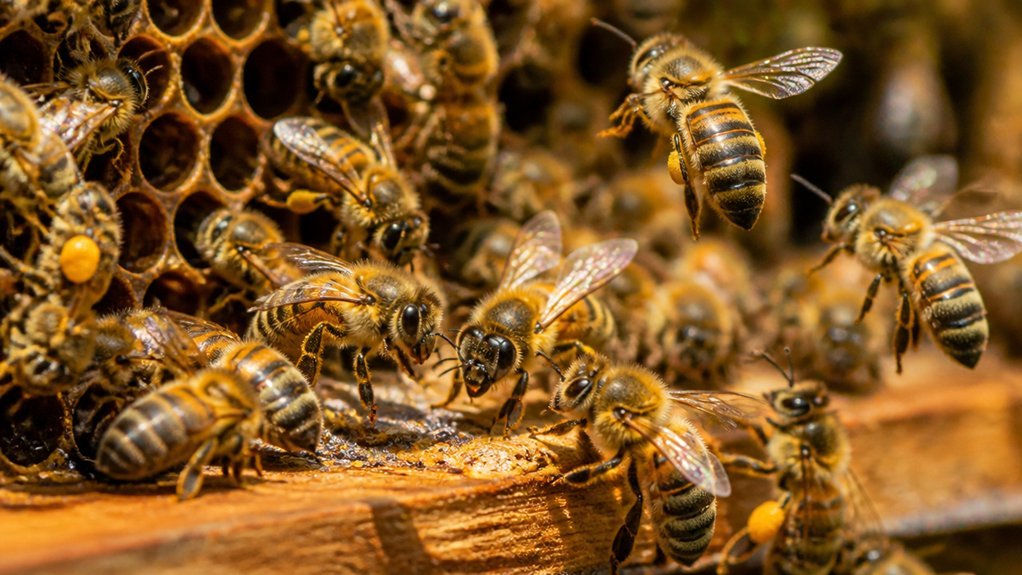
Five common causes of aggressive bee behavior are hive threats, queenlessness, sudden disturbance, bad weather, and pests or disease. When you move too fast, block flight paths, or handle frames roughly, bees think you’re a danger and defend the colony. If the queen is missing, the hive gets stressed and more defensive. Heat, wind, nectar shortages, mites, and sick bees can also raise tension, and there’s more to uncover about why.
Why Bees Get Aggressive
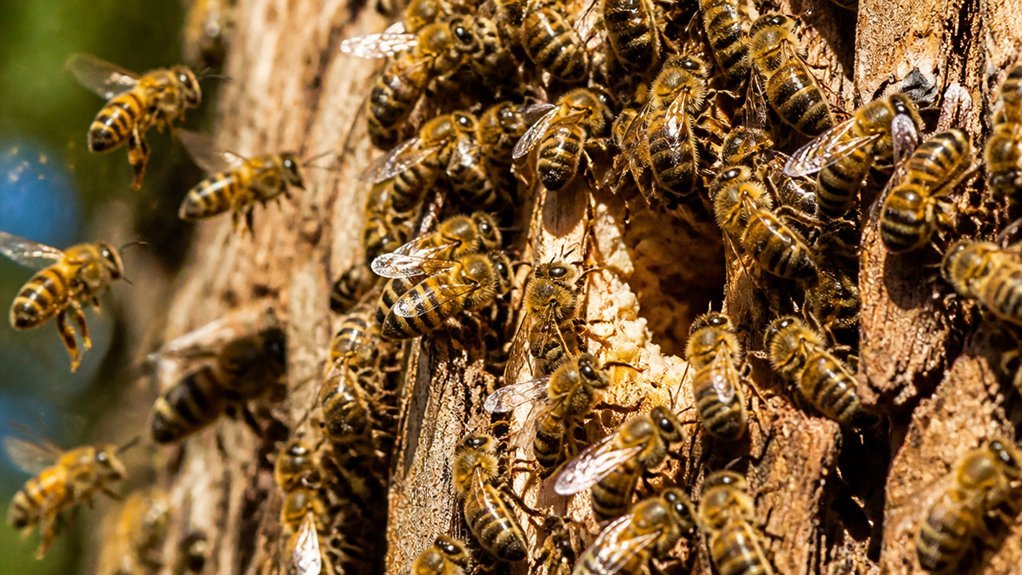
Bees usually get aggressive when they feel threatened, and your actions can trigger that response fast. You might startle them by moving too close, blocking their flight path, or vibrating the hive with sudden noise.
You can also provoke them by handling frames roughly, crushing a bee, or exposing the colony to smoke, wind, or harsh odors. When bees sense danger, they defend themselves, their nest, and their food stores with alarm pheromones that spread the warning quickly.
Heat, bright sunlight, and repeated disturbances can raise their stress too. If you work near bees, move calmly, wear proper protection, and avoid quick gestures. Proper veiling can improve your visibility and safety, helping you stay calm and reduce agitation among the bees. Give them space, and you’ll lower the chance of stings and keep the colony steadier.
How Queenlessness Stresses a Hive
A hive can also become unusually defensive when it loses its queen. Without her, you disrupt the colony’s main source of pheromonal order, and workers quickly sense that something’s wrong.
You may notice them moving erratically, building replacement cells, and guarding the entrance with extra intensity. The lack of a queen throws off brood care, egg laying, and task coordination, so stress spreads through the colony.
When you open the hive, you can trigger sharper responses because the bees are already unsettled and highly alert. Their agitation isn’t random; it reflects a system under strain.
If you confirm queenlessness, you should act promptly to restore balance, since a stable queen often helps calm the hive and reduce aggressive behavior. Recognizing the importance of queen rearing kits can aid in quickly replenishing your colony’s leadership and easing its stress.
Why Bees React to Disturbance
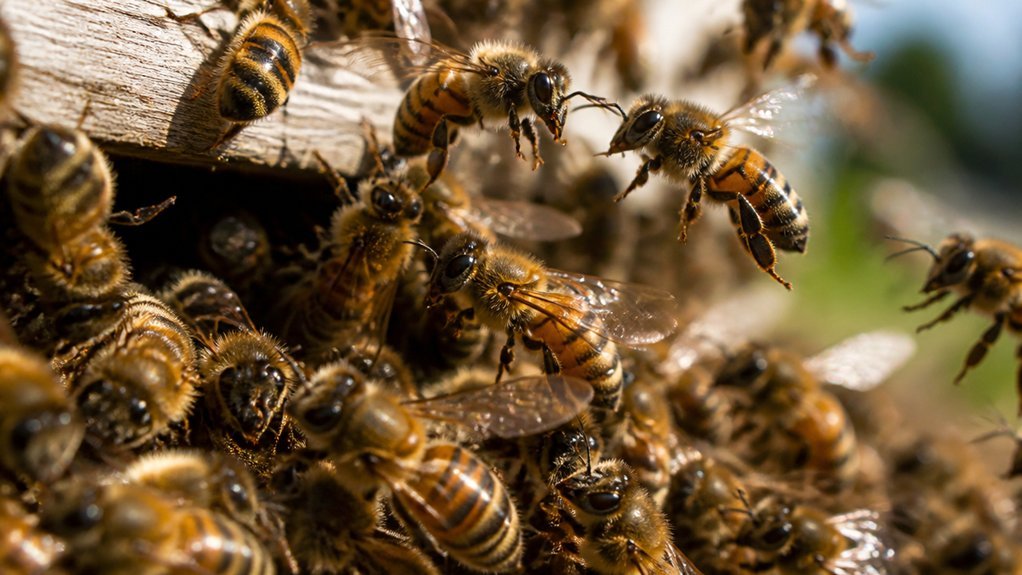
Sudden movement, smoke, loud vibrations, and repeated hive openings can all trigger defensive behavior because bees interpret them as threats to their colony. When you approach too quickly, you interrupt their sense of order and force workers to react before they can assess the situation.
If you bump the hive or drop equipment, you may send warning signals through the comb and agitate guard bees. Opening the hive often also releases scent cues that tell others something’s wrong, so more bees mobilize fast.
You can reduce tension by moving slowly, handling tools gently, and keeping visits focused. Proper tool handling techniques help minimize vibrations and unnecessary disturbance, promoting calmer bees. Your calm behavior helps bees stay settled, because they respond to disruption, not to you personally.
Respecting their space lowers the chance of stings and keeps inspections smoother.
How Weather and Nectar Shortages Trigger Aggression
Weather can strongly shape how defensive a colony becomes, especially when heat, cold, wind, or rain make foraging harder and the hive harder to regulate. You’ll often see bees grow testier when bad weather keeps them cooped up and food stores start running low.
If nectar dries up, foragers return empty-handed, and workers may guard their hive more aggressively to protect dwindling resources. Scarcity also raises competition with neighboring colonies, so you can expect sharper responses at the entrance.
Strong wind and sudden storms can further disrupt flight paths, leaving bees agitated and less predictable. When you understand these stressors, you can time inspections better, avoid unnecessary hive openings, and reduce the chance that a colony’s frustration turns into stings for you or anyone nearby. Probiotic supplements can help support gut health, aiding bees in managing stress during challenging weather conditions.
How Pests, Disease, and Rough Handling Affect Bees
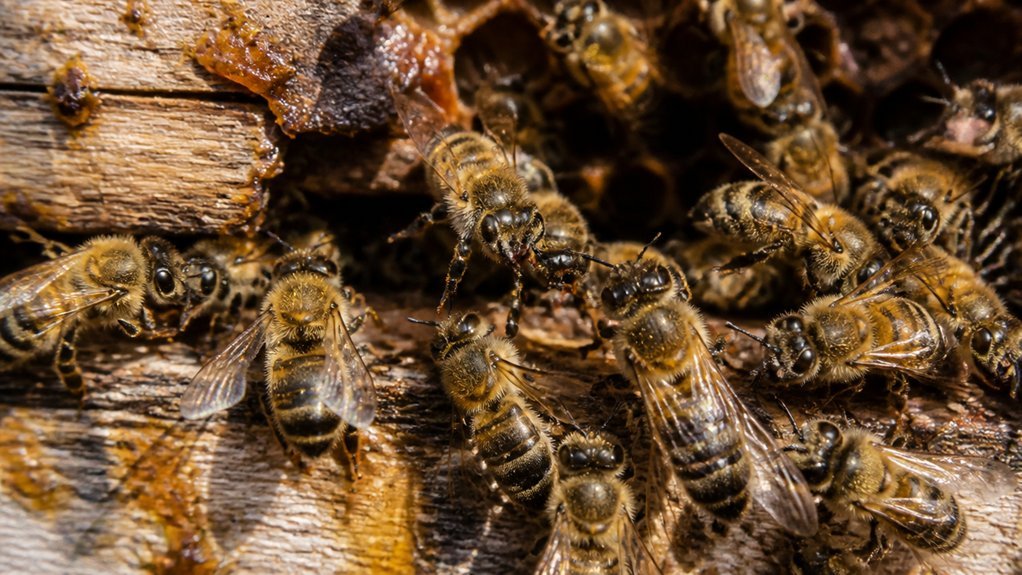
Pests, disease, and rough handling can all make a colony far more defensive. When mites, hive beetles, or wax moths invade, you stress the bees and disrupt their routines. Sick bees may emit alarm signals, and healthy workers often respond by guarding the entrance more fiercely.
If you crack frames, drop boxes, or smoke too heavily, you can trigger a surge of stinging behavior.
- Pests steal food and weaken brood, which raises tension.
- Disease spreads confusion, lowers immunity, and can heighten irritability.
- Gentle inspections help you reduce alarms and preserve colony balance.
You’ll get calmer bees when you move slowly, keep equipment clean, and check colonies only as long as needed. Careful handling doesn’t just protect you; it helps the whole hive stay stable and responsive.
Frequently Asked Questions
Can Certain Flowers Make Bees More Defensive?
Yes, some flowers can make bees more defensive if you disturb them while they’re feeding. You’ll notice this more around crowded blooms, especially when bees feel crowded, threatened, or quickly interrupted.
Do Bees Become Aggressive at Specific Times of Day?
Yes, you’ll often notice bees act more defensive in the morning and late afternoon when they’re busiest, but weather, shade, and disturbance matter too, so you shouldn’t assume a fixed daily aggression schedule.
Can Smoke Reduce Aggressive Bee Behavior?
Yes, smoke can calm bees because it masks alarm signals and makes them gorge on honey, which distracts them. You should use it carefully, since too much smoke can still stress the colony.
Are Some Bee Species Naturally More Aggressive Than Others?
Yes, some bee species are naturally more aggressive than others, and you’ll notice it in how quickly they defend their nest. You can expect Africanized honey bees to react far more aggressively than many others.
How Far Can Aggressive Bees Chase an Intruder?
You can be chased about 100 to 300 feet, sometimes farther if you keep moving. You’ll usually outrun them indoors or in a vehicle, but they’ll keep pursuing until you’re well away from their nest.
In Summary
When you understand what makes bees aggressive, you can handle them with more care and confidence. You’ll avoid unnecessary disturbance, watch for queenlessness, and stay alert to bad weather, low nectar flow, pests, and disease. By being gentle and observant, you help keep your hive calmer and healthier. A steady, respectful approach goes a long way in reducing stress and protecting both you and your bees.