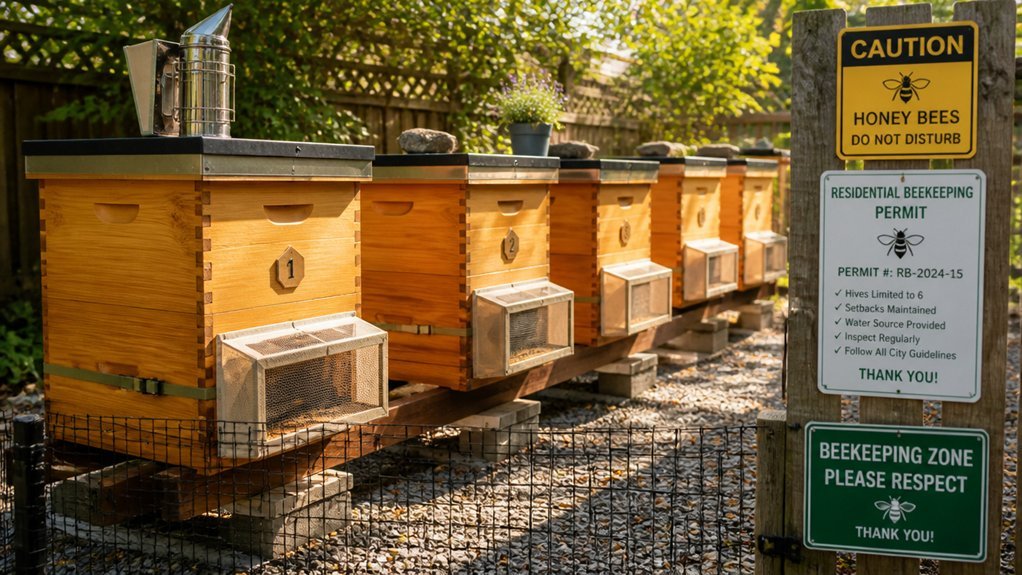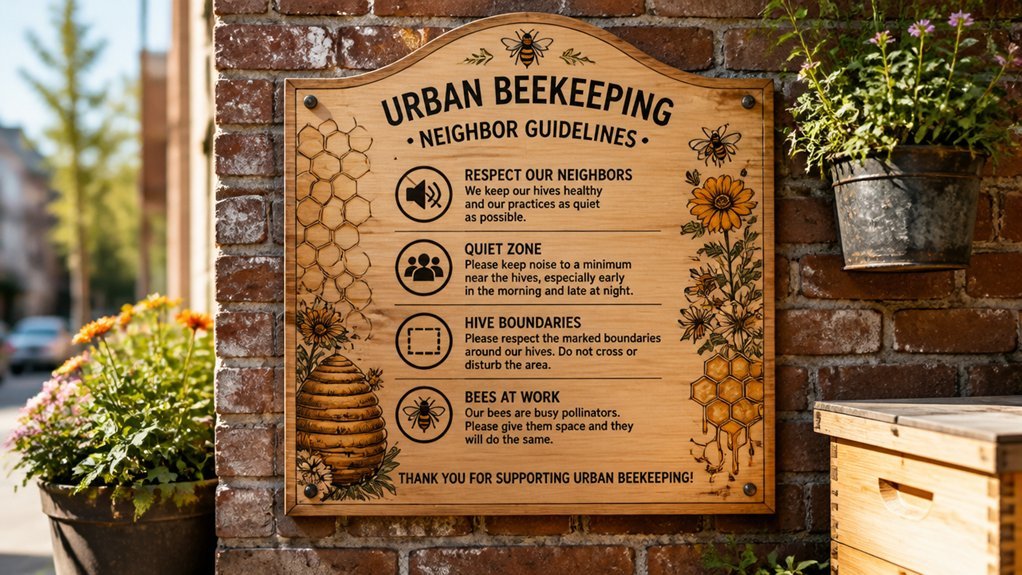
You need to check your city’s bee ordinances, setback rules, hive limits, and any HOA or landlord requirements before you place hives. Keep entrances pointed away from patios, windows, sidewalks, and play areas, and use fences or shrubs to lift flight paths above head height. Inspect often, control swarms fast, and keep water nearby. If a neighbor complains, respond calmly, document your fixes, and stay compliant so you can keep your bees in peace, with more practical steps ahead.
What Urban Beekeeping Rules Usually Regulate
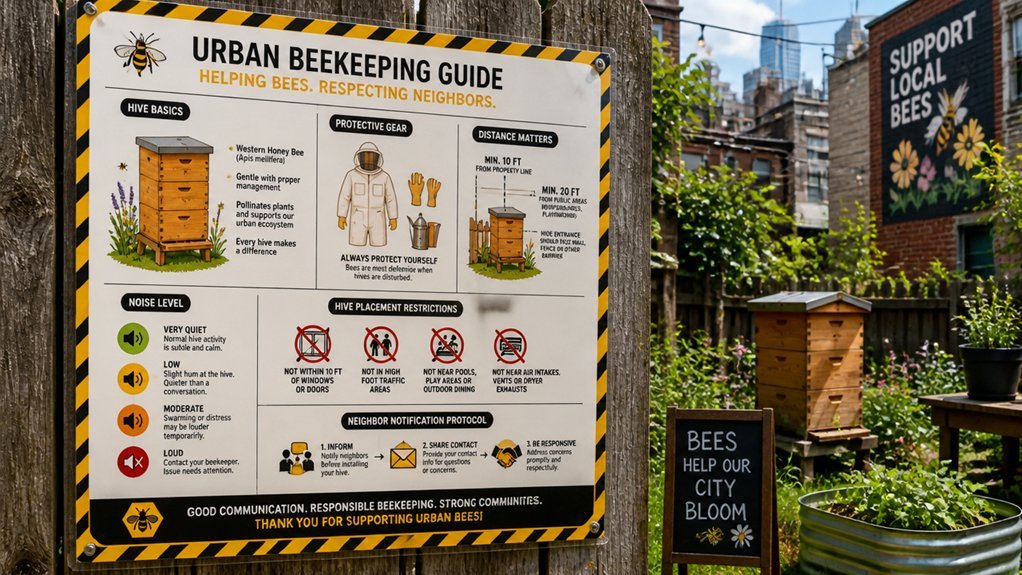
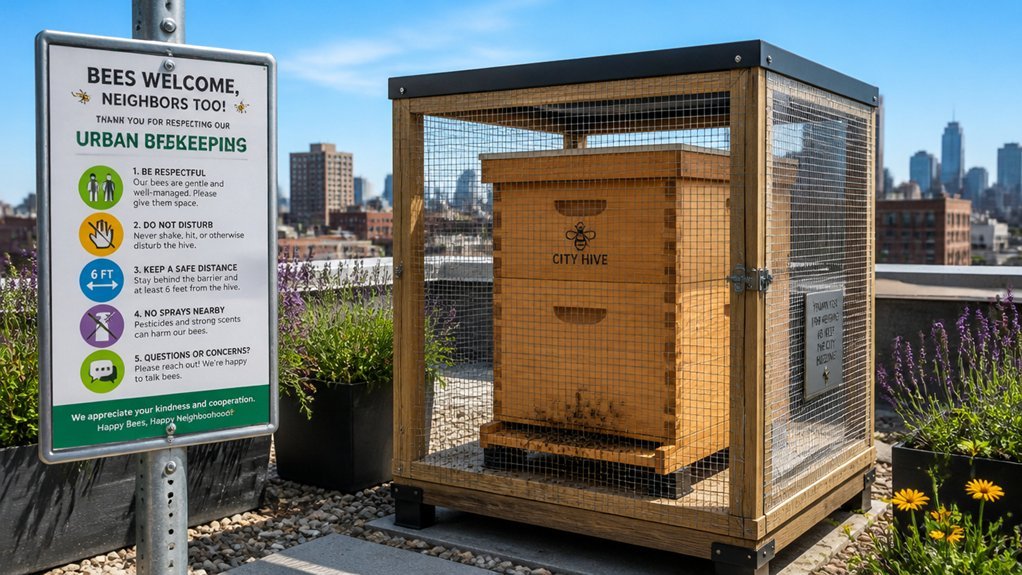
Urban beekeeping rules usually regulate where you can place hives, how many colonies you can keep, and how far they must sit from property lines, sidewalks, or neighboring homes. You’ll often need to keep hives in a fenced or screened area, above ground level, or behind a barrier that nudges bees upward as they leave.
Rules may also set limits on water access, hive maintenance, and swarm control so you reduce nuisance risks. Some cities require you to register colonies, mark hives, or prove you can manage aggressive bees. Others restrict bees near schools, parks, or dense housing.
You should also expect standards for sanitation, feed storage, and queen replacement if colonies become unruly. Additionally, the material quality of hive components, such as cedar with beeswax coatings, plays a role in hive health and neighbor safety, emphasizing the importance of wood material quality in responsible beekeeping practices.
In practice, these rules aim to balance beekeeping with neighbor comfort and public safety.
Check Your City Bee Ordinances First
Before you bring home hives, you should check your city’s bee ordinances so you know which permits you need. You’ll also want to confirm zoning rules and setback requirements, since they can affect where you place your hives. Some cities also require hive registration, so make sure you understand that process before you start. It’s helpful to review regulations about hive size and protective equipment, like robbery prevention screens, to ensure your setup complies with local standards.
Local Beekeeping Permits
Even if your city welcomes backyard hives, you still need to check whether local beekeeping permits or registrations apply to your address. Some cities require you to file a simple registration, pay a fee, or renew your permit each year before you place bees on your property.
You may also need to provide your name, contact information, and hive count, so officials can keep records current. Don’t assume a nearby beekeeper’s approval covers you, because rules can change block by block or by property type.
If your permit lapses, you could face warnings, fines, or orders to remove your hives. Before you buy bees, visit your city website, call the licensing office, or ask your extension agent for the exact application steps and deadlines. Additionally, material and build quality across kits can influence how well your hive withstands local weather conditions, so selecting durable and weather-resistant materials is crucial.
Zoning and Setbacks
Zoning rules can decide whether you can keep bees at all, and setbacks often determine exactly where you can place your hives. You should check your city’s bee ordinance before you move a single hive, because some districts allow bees only in certain residential, agricultural, or mixed-use areas.
Setback rules may require you to keep hives a specific distance from property lines, sidewalks, schools, or neighboring homes. If your lot is small, those limits can affect where you build a stand, fence, or flight barrier. Don’t guess based on another beekeeper’s setup, since local rules can differ block by block.
Reviewing your local laws on hive material and construction can help ensure your setup complies with regulations and is safe for both your bees and neighbors.
Read the zoning code, map your property, and confirm the measurements with your planning department so you don’t create a complaint or a violation.
Hive Registration Rules
Some cities require you to register your hives with the local agriculture department, health office, or animal control before you keep bees legally. Check your city’s bee ordinance before you buy equipment, because registration often includes fees, hive counts, and your exact address.
You may also need to tag each hive, renew annually, and report moves or colony losses. If you skip registration, inspectors can fine you or order hive removal, which can turn a small complaint into a bigger problem.
Keep copies of your permit, confirmation number, and any inspection notes. When neighbors complain, proof of registration shows you’re following local rules and helps you respond quickly.
If your city doesn’t publish clear guidance, call the clerk’s office and ask for the current beekeeping requirements before setting up. Following local regulations is crucial to maintaining a positive relationship with your community and avoiding penalties.
When Neighbors Can File a Complaint
Neighbors can file a complaint when your hive creates a real nuisance, such as swarming onto nearby property, attracting pests, or producing noise or odors that interfere with their use of their own space. You may also face complaints if bees repeatedly enter windows, balconies,, or yards in a way that makes neighbors feel unsafe or unable to enjoy their property. If you keep hives in a place where local rules prohibit them, a neighbor can report that violation too. Complaints often carry more weight when they describe repeated problems, not a one-time event. Proper use of mouse guards can help prevent pests and reduce the likelihood of neighbor complaints related to pests or disturbances. If you receive a complaint, respond promptly, document what’s happening, and review your local ordinance so you can address the issue before it escalates into enforcement or a formal dispute.
Set Up Hives to Prevent Conflict

To reduce the chance of complaints, place your hives where they’re least likely to affect nearby people and pets. You should keep entrances pointed away from neighboring yards, sidewalks, and windows so flight paths stay predictable. Use a solid fence, hedge, or other barrier to lift bees above head height and calm their takeoff line.
Give each colony enough space, and avoid crowding boxes together, which can trigger defensive behavior. Keep water nearby so bees don’t seek it from pools, birdbaths, or pet dishes. Choose gentle stock and requeen aggressive colonies quickly. Ensuring proper entrance reducers can help control hive activity and reduce disturbances in the surrounding environment.
Inspect regularly for swarming, robbing, or disease, because stressed hives can become harder to live near. Clean up spills, wax, and dead bees promptly, and keep lids tight to prevent odors and pests.
Place Hives for Quiet, Safe Access
Place your hives in a quiet spot that keeps bees away from heavy foot traffic and noisy activity.
You’ll want clear, safe access paths so you can inspect and service them without crowding walkways or blocking exits.
Give neighbors a buffer zone that reduces surprise encounters and helps keep everyone comfortable.
Ensuring proper hive stand placement on stable, level ground will further protect your bees and make maintenance easier.
Quiet Hive Placement
A well-chosen hive spot can make urban beekeeping much smoother. You should place your hives where fences, sheds, or dense shrubs help absorb flight noise and visually screen bee traffic from neighbors.
Keep the entrance angled away from patios, sidewalks, windows, and play areas so bees don’t cross common gathering spots. You’ll also want morning sun and afternoon shade when possible, because a comfortable hive stays calmer and less defensive.
Avoid echo-prone corners, rooftop edges, and areas beside loud machines or HVAC units, since those can raise stress and draw attention. If you can, choose a stable, level location that lets bees come and go without disturbance. Ensuring proper insulation R-value and stable internal temperatures can also contribute to a calmer hive environment.
Thoughtful placement won’t eliminate every concern, but it can reduce complaints and help your bees settle in fast.
Safe Access Paths
Even with a quiet hive spot, you still need a clear path to reach it safely. You should plan your route before you place equipment, so you’re not squeezing past fences, bins, or slippery ground.
Keep the approach direct, well lit, and free of trip hazards, and make sure you can carry tools without brushing against walls or plants.
- Leave enough width to walk and turn while holding a hive tool or box.
- Choose stable footing so you won’t stumble when working early or late.
- Keep gates, latches, and doors easy to open with one hand.
- Using hive fastening products like straps and clamps can help maintain your equipment’s stability and prevent unexpected shifts while moving.
When you can move calmly and efficiently, you reduce stress, avoid accidents, and handle routine checks without drawing attention or creating unnecessary disturbance.
Neighbor Buffer Zones
Once you’ve set a safe access path, think about the space around it and how your hive’s location affects the people next door. Give your hives a buffer from fences, patios, windows, and walkways so neighbors don’t feel crowded or startled.
Aim for a quiet corner with some screening from shrubs, trellises, or a solid barrier that keeps flight lines above head height. You should face entrances away from shared spaces and place water nearby so bees don’t search across a neighbor’s yard.
Keep regular mowing, trimming, and cleanup to reduce drift, swarms, and complaints. If the property is tight, use fewer hives and space them to avoid concentrated traffic.
Clear buffering shows respect, lowers tension, and helps your apiary stay welcome.
Reduce Bee Traffic Near Shared Spaces
To reduce bee traffic near shared spaces, you can place hives so flight paths rise quickly and point away from patios, walkways, and neighbors’ yards.
Place hives so bees rise quickly and head away from patios, walkways, and neighboring yards.
You should also keep entrances unobstructed so bees leave the apiary in a steady, upward line instead of skimming low across common areas. Trim nearby plants that force bees to hover where people pass, and avoid clustering hives beside fences or seating spots.
- Angle hive entrances toward open sky.
- Use tall hedges or screens to redirect movement.
- Position boxes where bees won’t cross daily foot traffic.
When you guide flight paths with care, you lower the chance of surprise encounters, reduce complaints, and make your bees easier to live with in a dense neighborhood.
Keep Water Sources Near Your Hives

After you’ve guided bee traffic away from patios and walkways, give your hives a reliable water source nearby so they don’t search for it in neighbors’ yards or pools. Set out a shallow basin, birdbath, or bucket with floating corks, pebbles, or wood so bees can land safely.
Keep it close to the apiary and refill it often, especially during hot, dry spells. Fresh water helps bees cool the hive, dilute honey stores, and avoid risky flights across shared spaces. Change the water regularly to limit mosquitoes and odors, and place the container where you can monitor it without disturbing the colony.
If bees already favor a spot, move the new source gradually toward your hives so they’ll switch with less hesitation and fewer complaints.
How to Respond to Neighbor Complaints
When a neighbor raises a concern, listen first and respond calmly so the conversation stays constructive. You don’t need to defend every choice right away; instead, thank them for speaking up and ask what they noticed. Keep your tone friendly and direct, and avoid arguing about who’s right.
Then address the issue with practical steps:
- Explain what you’re doing to reduce problems, such as checking hive placement or flight paths.
- Ask whether there’s a specific time, place, or behavior that bothers them most.
- Offer to follow up after you’ve made changes so they can see you’re taking the complaint seriously.
If you stay respectful, you’ll build trust and make future conversations easier.
Document Your Hive Management Steps
Keep a simple record of each hive check, because good documentation helps you spot patterns and explain your actions if questions come up. Note the date, weather, hive temperament, and any maintenance you performed. Include photos when you can, especially if you moved boxes, added feed, or changed equipment. A clean log shows that you’re staying attentive and makes it easier to answer concerns calmly and factually.
| Check item | What you note |
|---|---|
| Date and time | When you inspected the hive |
| Hive condition | Brood, stores, temperament |
| Actions taken | What you changed or added |
Keep your notes in one place, such as a notebook or phone app, so you can find them quickly. If someone raises a concern, you’ll have a clear history that shows consistent, responsible management.
Fix Common Problems Before They Escalate
You can stop small hive issues early by spotting triggers like overcrowding, drought, or pests before they spread.
You should also address neighbor concerns quickly by keeping hives tidy, controlling swarms, and responding to complaints with clear communication.
Identify Hive Triggers
What sparks trouble in an urban hive? You can usually trace it to a few triggers you can spot fast. Watch your bees when you open the hive, inspect nearby activity, and note patterns that repeat.
- Crowding: When frames fill up and space runs short, bees get restless and defensive.
- Disturbance: Repeated bumps, sudden shadows, or rough inspections can trigger agitation.
- Resource stress: Thin nectar flow, poor ventilation, or a weak queen can make the colony sharp-tempered.
If you identify these signals early, you can act before small issues turn into persistent problems. Keep your notes simple, compare each visit, and treat every change as a clue.
This helps you stay ahead of trouble and manage the hive with calm, steady confidence.
Reduce Neighbor Concerns
Cut neighbor complaints off early by addressing the issues people notice first: swarms, drift, noise, odors, and bees near shared spaces.
You should move calmly and work the hive when your neighbors are least active, so you don’t stir up traffic or create a nuisance. Keep flight paths aimed upward and away from fences, walkways, and patios, and trim anything that funnels bees toward common areas.
If bees linger on trash, fruit, or spills, clean the area quickly. Check for strong smells from feeders or hive materials, and remove anything that’s attracting attention.
When someone raises a concern, listen, explain what you’ve changed, and thank them for speaking up. A quick response shows you’re responsible and helps you handle small problems before they turn into formal complaints.
Prevent Future Escalations
Small issues can turn into city complaints fast if you don’t stay ahead of them. You should inspect your hive weekly, note changes in bee traffic, and fix loose lids, spills, or drifting odors before neighbors notice.
Keep clear communication open so people can share concerns early instead of building resentment. If a complaint comes up, respond quickly, explain what you’ve changed, and follow through.
- Trim nearby plants and manage water sources to reduce crowding.
- Recheck fence lines, setbacks, and flight paths after storms or yard changes.
- Log inspections, treatments, and repairs so you can spot patterns fast.
When you act early, you protect your hive, calm tensions, and show that you take urban beekeeping seriously.
Follow Urban Beekeeping Limits on Hives and Distance
Before you place your first hive, check your city’s beekeeping limits on both hive count and property setbacks, since these rules often decide whether your apiary is legal. You may need to keep only a few colonies, or you might face a minimum lot size before you can keep any at all.
Measure from your hives to fences, sidewalks, and neighboring homes, then move them if they sit too close. If your local code requires screening, install a solid barrier that redirects flight paths upward. Don’t guess at setbacks; use a tape measure and verify the ordinance yourself.
When you stay within the hive-count cap and distance rules, you reduce conflict, avoid fines, and show neighbors you’re running a careful, compliant operation.
Manage Swarms Before They Reach Neighbors
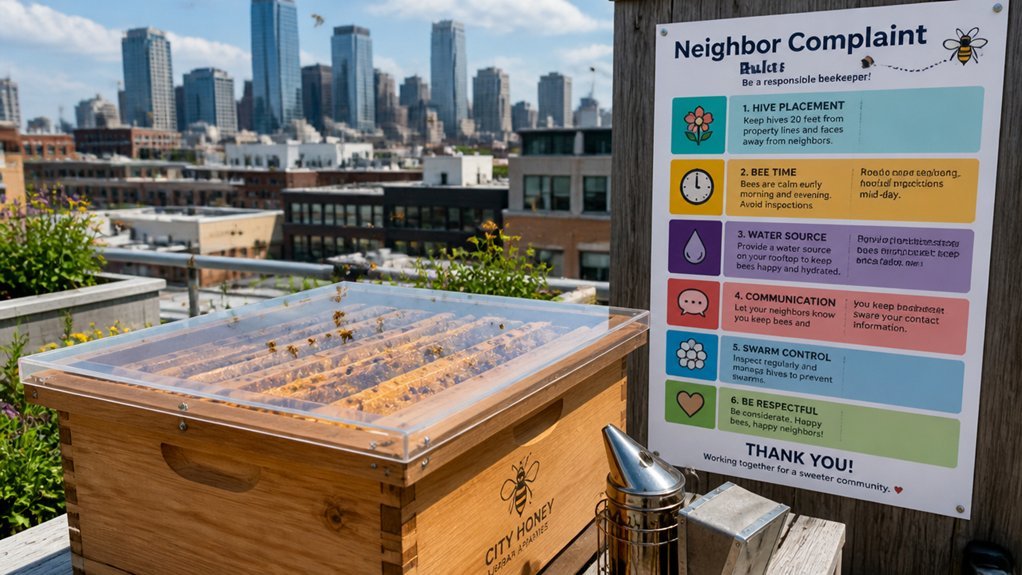
Even well-managed hives can swarm, so you need a plan to catch the signs early and act fast. Watch for crowded brood boxes, queen cells, and bees clustering outside the entrance.
When you notice these signals, give the colony more space, split the hive if needed, and add ventilation to ease congestion.
- Inspect weekly during heavy nectar flow so you spot swarm pressure before it builds.
- Replace old queens on schedule, because younger queens usually reduce swarming urge.
- Keep spare equipment ready, so you can make a split the same day you see signs.
If a swarm leaves, respond quickly and calmly. Retrieve it before it settles nearby, and don’t let it form a nuisance in a neighbor’s yard, porch, or tree.
Work With HOAs, Landlords, and Tenants
When your hives sit in a neighborhood, you’ve got to line up expectations with the people who control the property rules. If you live under an HOA, read the bylaws, architectural rules, and pet or livestock clauses before you place a hive. Ask for written approval when the covenants require it.
If you rent, get your landlord’s consent first and check your lease for restrictions on animals, structures, or nuisance activity. If other tenants share the property, tell them where the hives sit, how you’ll manage access, and what you’ll do to keep common areas clear.
Keep your setup tidy, quiet, and screened when possible. Clear communication now can prevent misunderstandings later and show you’re acting as a responsible beekeeper, not a surprise problem.
How to Respond to a Formal Complaint
If you get a formal complaint about your hives, respond quickly and professionally. Read the complaint carefully, note each concern, and don’t assume the neighbor wants your bees gone. Reply in writing, stay calm, and thank them for bringing the issue to your attention.
Respond quickly, thank them, and address each concern calmly and professionally.
Then take action on what you can fix right away, like hive placement, water access, or flight paths.
- Acknowledge the complaint and set a respectful tone.
- Investigate the problem yourself and document what you find.
- Offer a clear plan and follow up within a few days.
Keep your message brief, factual, and cooperative. Don’t argue, blame, or get defensive. If you can show that you’re listening and addressing the concern, you’ll often reduce tension and protect your relationship with the people nearby.
Keep Urban Beekeeping Legal Long-Term
To keep urban beekeeping legal long-term, stay ahead of changing rules by reviewing local ordinances, permit requirements, and neighborhood restrictions at least once a year. Subscribe to city council updates, zoning notices, and agricultural department alerts so you catch changes early.
Keep your hive count, setback distances, and water sources within current limits, and document inspections, treatments, and swarm control. Build good relationships with neighbors by sharing contact information and answering concerns quickly.
If you expand your apiary, confirm whether new permits or site plans are needed before adding colonies. When rules conflict, ask local officials for written guidance and save it. Staying organized helps you prove compliance, avoid fines, and protect your bees, your property, and your reputation over time.
Frequently Asked Questions
Can I Keep Bees on a Balcony in an Apartment Building?
Yes, you can sometimes keep bees on a balcony, but you’ll need your building’s permission, local rules, and safe hive placement. Check lease terms, neighbors’ concerns, and city ordinances before starting.
Do I Need Insurance for Urban Beekeeping?
You might not need insurance, but you should get it. Your policy can protect you if bees sting someone, damage property, or trigger complaints. Check your lease, local rules, and coverage limits first.
Can I Sell Honey From Backyard Hives Legally?
Yes, you can often sell honey from backyard hives legally, but you’ll usually need local permits, food-safety compliance, and proper labeling. Check zoning, licensing, and cottage-food rules before you start selling.
Are Rooftop Hives Treated Differently Than Ground-Level Hives?
Yes, you’ll often face similar rules, but you may need extra permits, structural approval, or safety measures for rooftop hives. You should also check local zoning, building codes, and neighbor-related restrictions.
What Should I Do if Bees Sting a Neighbor?
You should apologize, help them get medical attention, and call emergency services if needed. Then inspect your hive, reduce risk, document the incident, and notify your local authorities or association if required.
In Summary
Urban beekeeping can work well when you stay informed, thoughtful, and responsive. Check your local rules, place your hives carefully, and keep them managed to reduce noise, swarms, and safety concerns. If a neighbor complains, listen first and fix problems quickly. When you work with HOAs, landlords, or tenants early, you protect your bees and your peace. Good planning helps you keep beekeeping legal, practical, and neighbor-friendly for the long run.