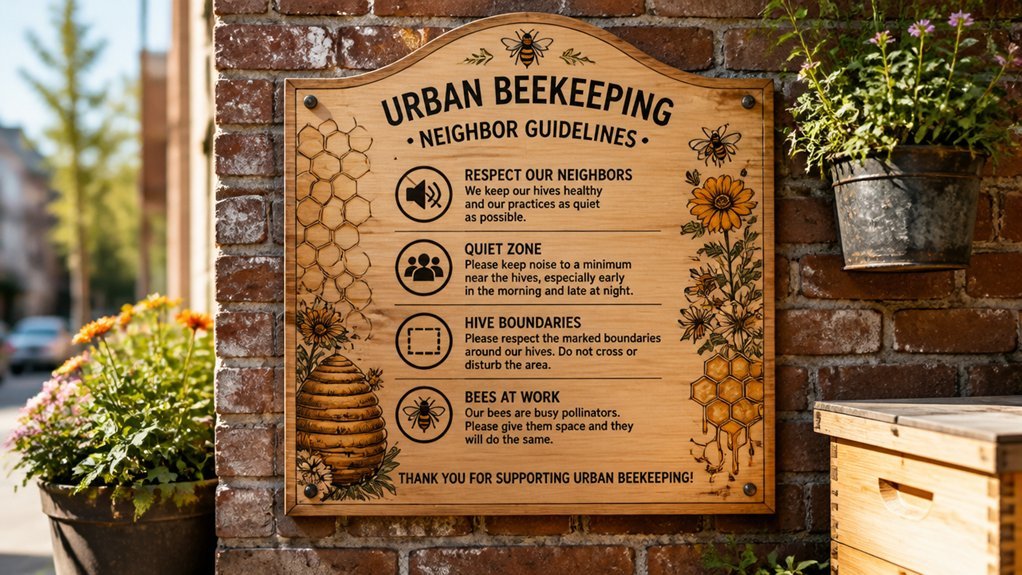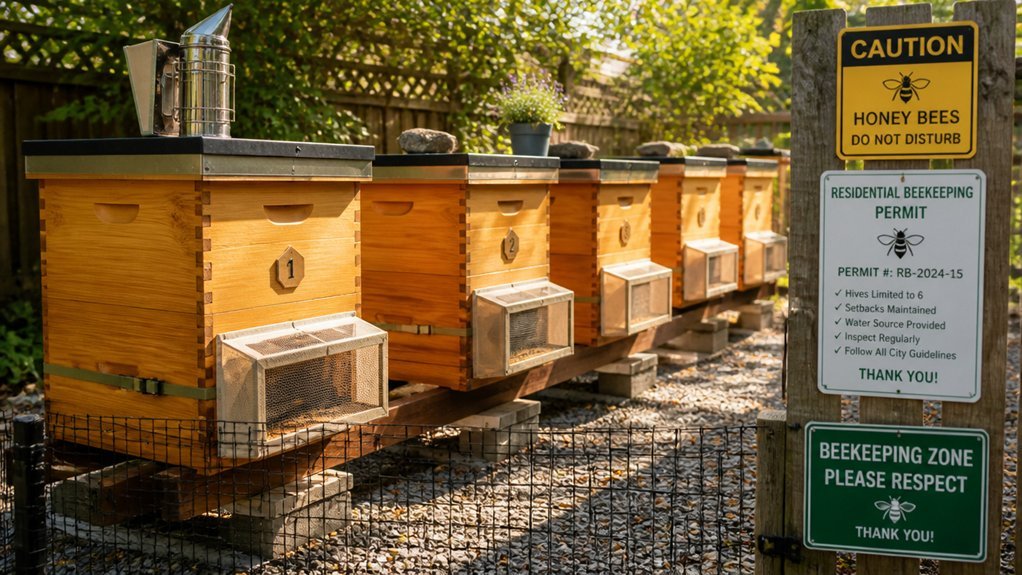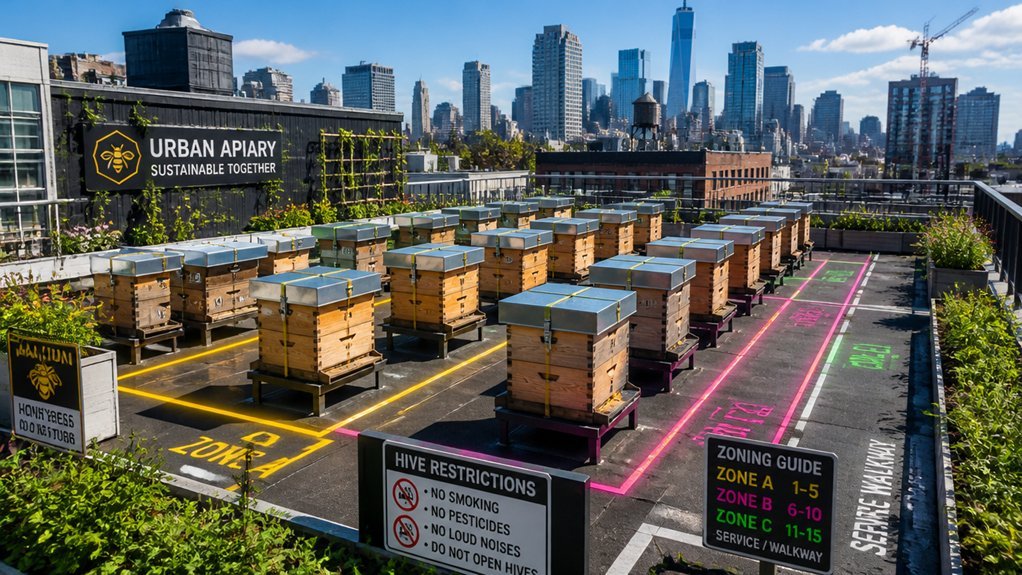
Urban apiary zoning rules explain where you can keep bees, how many hives you’re allowed, and what setbacks, permits, and neighbor protections apply in your city. You should check local zoning maps, permit rules, and HOA or lease limits before installing anything. Many cities require registration, inspections, and specific hive placement away from sidewalks and property lines. Good records and neighbor-friendly management help you stay compliant, and the details can get even more useful from here.
What Urban Apiary Rules Cover
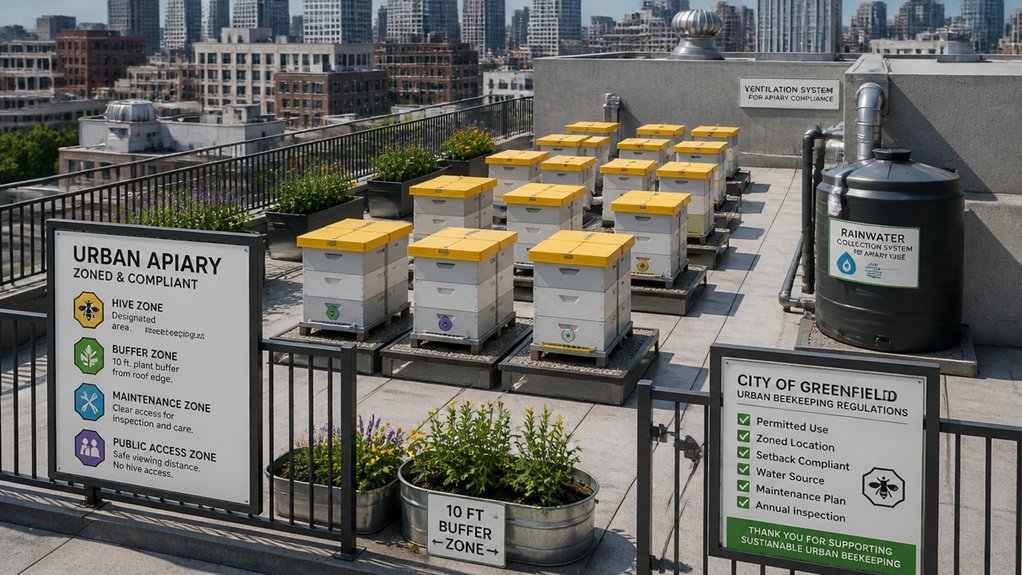
Urban apiary rules usually spell out where you can keep hives, how many colonies you may maintain, how far they must sit from property lines or sidewalks, and what barriers or fencing you need to protect neighbors. You’ll also see limits on hive placement near schools, parks, or other public spaces.
These rules often require you to manage swarms, control odors, and prevent bees from creating a nuisance. You may need to provide water sources, keep equipment tidy, and store honey safely.
Some rules address hive inspection, sanitation, and winter care, too. When you understand these basics, you can plan a site that fits the law and reduces conflict. Clear compliance helps you protect your bees, your neighbors, and your right to keep them in town.
Check Your City’s Beekeeping Code
Before you bring bees home, check your city’s beekeeping code so you know exactly what’s allowed on your property. Start with your municipal website, zoning office, or animal control department, and read the ordinance yourself. Ensuring your hive setup complies with the material and build quality standards can help prevent future issues. You’re looking for permit requirements, hive limits, setback distances, water provisions, fencing rules, and inspection standards. Don’t rely on neighborhood rumors or general state guidance, because cities often add stricter local rules. If the code uses technical terms, ask for clarification before you buy equipment or install hives. Keep a copy of the current ordinance, note any renewal dates, and save written approval if the city issues one. When you understand the code first, you can plan your apiary confidently and avoid costly changes later.
Where Urban Apiaries Are Allowed

You’ll usually find that urban apiaries are allowed only in certain zones, with residential areas often facing tighter limits on hive numbers, setbacks, or permits.
Some commercial districts may allow beekeeping more freely, especially if your setup fits local safety rules. You can also check whether parks, community gardens, or other public spaces permit hives under special approval.
Residential Zoning Limits
Where you can keep an urban apiary often depends on local residential zoning, which may limit beekeeping to certain lot sizes, property types, or backyard setups. You’ll usually need to check whether your home sits in a zone that allows hives and whether your yard meets spacing rules.
Some cities require setbacks from property lines, sidewalks, or neighboring homes, while others cap hive counts per lot. You should also watch for fencing, screening, and water-source requirements that help reduce nuisance concerns.
- Confirm your zoning district.
- Verify minimum lot size.
- Measure required setbacks.
- Check hive-number limits.
- Consider the wood material quality used in hive construction to ensure durability and insulation for healthy colonies.
If your property fails any rule, you may need to adjust hive placement or seek a variance. Always review local codes before you install bees.
Commercial District Allowances
In some cities, commercial zones give you more flexibility than residential areas, but you still need to verify that beekeeping is explicitly allowed before you set up hives. Check your zoning map, then confirm whether your lot sits in a district that permits apiaries, accessory agricultural use, or rooftop hives. Commercial areas often tolerate small-scale operations better because they’re designed for mixed activity and less dense housing. You should still review setback, enclosure, and nuisance rules before you install equipment. Utilizing premium woods and beeswax coatings can also help extend hive longevity and meet any local aesthetic or safety standards required by your zoning authority.
Permitted Public Spaces
Public spaces can host urban apiaries only when local rules specifically allow them, so start by checking whether parks, community gardens, schools, or civic rooftops are listed as permitted sites.
You’ll usually need written permission, a site plan, and proof that your hives won’t block access or create nuisance. Confirm setbacks, fencing, water access, and signage requirements before you move bees in.
Additionally, verifying that the chosen location has properly designed trap entry designs can help reduce non-target captures and ensure effective pest management.
- Verify the zoning map and public-use designation.
- Get approval from the property manager or city agency.
- Meet safety standards for visitors, students, and nearby residents.
- Keep inspections, emergency contacts, and maintenance logs current.
If a site isn’t explicitly allowed, don’t assume it’s okay. Cities often treat public land more strictly than private property, so one missing permit can shut down your apiary fast.
Setbacks, Lot Lines, and Neighbor Distance
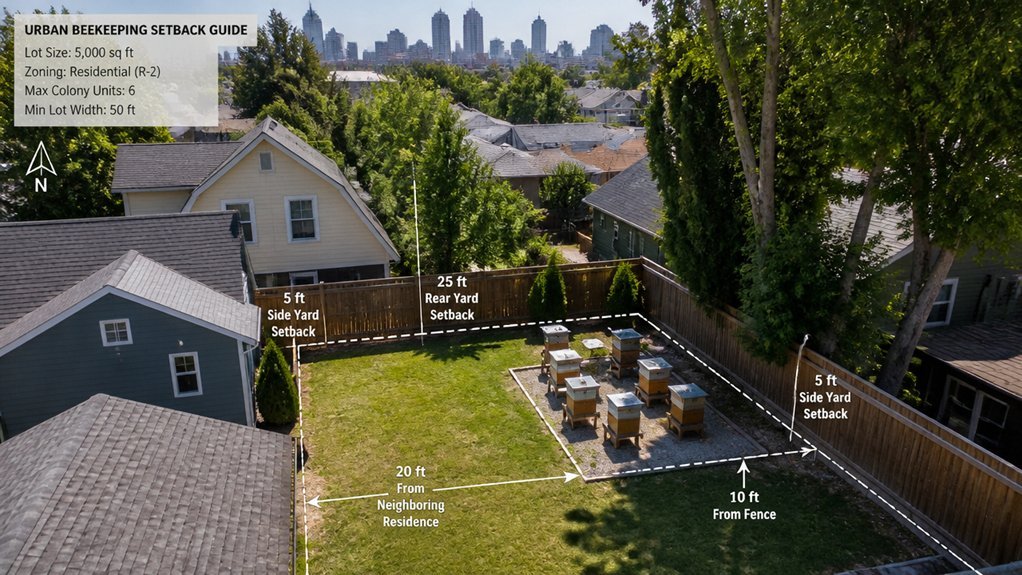
You should also verify lot line buffer rules, because your apiary may need a specific distance from property boundaries. If you respect these neighbor-distance limits, you’ll reduce complaints and stay in compliance. Additionally, ensuring your hives are positioned at an appropriate hive stand height can help with ease of inspection and ventilation.
Setback Distance Basics
How close can an apiary sit to a property line before it runs into zoning trouble? You need to read your local setback rule first. Most codes measure from the hive entrance, stand, or bee yard edge to the lot line, so don’t guess. A shorter distance can trigger complaints, inspections, or a permit denial.
If you’re planning an urban apiary, check these basics:
- Measure the exact property boundary.
- Identify the point the code uses for distance.
- Compare your layout with the minimum setback.
- Rework the hive location before installation.
- Consider entrance size control to help meet setback requirements and maintain hive security.
You’ll also want to think about neighbor access, but keep the focus on compliance. When you place hives, leave enough room to stay within zoning limits and avoid a violation.
Lot Line Buffer Rules
When setbacks aren’t enough on their own, lot line buffer rules add another layer of distance between your hives and neighboring property. You may need to place colonies a set number of feet from the property boundary, even if your yard feels large enough. These rules help reduce complaints about flight paths, drifting bees, and shared fence lines.
Check whether your city measures from the hive entrance, the hive stand, or the outer edge of your apiary. If you use screening, fences, or hedges, you might qualify for reduced buffers. Don’t assume your backyard setup passes just because it’s private.
Review your zoning code, confirm survey lines, and keep your hives where neighbors won’t feel boxed in or exposed. Be mindful of hive stabilization practices, which help keep colonies secure during storms and wind, ensuring compliance with local safety standards.
Permits and Registration Rules
Before you place a hive on a rooftop, in a backyard, or on a shared lot, check whether your city requires a beekeeping permit or registration. You’ll usually need to file before you bring bees home, and some places ask you to renew each year. Keep your paperwork handy, because inspectors may want proof that you’ve complied. Registration often helps the city track apiaries and respond to complaints quickly. Additionally, ensuring proper seasonal care and hive management can improve your chances of compliant beekeeping.
Hive Limits for Small City Lots

On a small city lot, you’ll usually face hive limits based on your property’s size, so check the local threshold before you add boxes. You may only keep a set number of hives, and that cap often drops as lot size shrinks. You’ll also need to follow spacing and setback rules so your hives stay safely away from neighbors, sidewalks, and property lines. Additionally, understanding the varroa mite testing methods can help you monitor colony health effectively within your urban environment.
Lot Size Thresholds
Even on a compact city lot, you can usually keep a small hive setup if local zoning sets clear lot-size thresholds. You should check how your parcel’s square footage, frontage, and setbacks affect eligibility before you buy bees or equipment. A consideration of beehive weight and setup can help determine what’s manageable within your space constraints.
Rules often use these markers to separate tiny lots from larger urban properties, so a quick review can save you trouble. Focus on:
- minimum lot area
- required yard depth
- distance from property lines
- access space for maintenance
When your lot meets the standard, you can plan placement with confidence and avoid complaints from neighbors or inspectors. If your property falls short, you may need a variance, a shared site, or a different location. These thresholds shape what’s allowed, so confirm them first.
Maximum Hive Counts
Maximum hive counts set the upper limit on how many colonies you can keep on a small city lot, and they often matter as much as lot size itself. You may qualify for a property, yet still need to cap your apiary at two, three, or four hives under local rules. That limit helps cities balance beekeeping with neighborhood density, odor, traffic, and nuisance complaints.
Before you add more colonies, check whether the ordinance counts nucs, splits, or temporary replacement hives the same way. Some codes also tie the maximum to resident occupancy or parcel type, so your allowance can change if you rent, share, or expand the property. When in doubt, confirm the exact number with your zoning office before installing extra boxes.
Spacing And Setbacks
Spacing rules can matter just as much as hive count on a small city lot, because many ordinances require each hive to sit a set distance from property lines, sidewalks, homes, or neighboring yards. You should measure your yard before you place anything, since setbacks often decide whether your apiary’s allowed at all.
Check local codes for:
- side and rear boundary distances
- minimum space from buildings
- required screening or fencing
- clear access for inspection and handling
If your lot’s tight, you may need fewer hives, a different location, or a barrier that redirects flight paths upward. Keep entrances facing away from foot traffic, and leave room for maintenance.
When you plan for spacing first, you avoid complaints, fines, and costly hive moves later.
Height, Fencing, and Flight Paths

When you place an apiary in a city, you need to think beyond hive count and setbacks: height limits, fencing, and bee flight paths all shape whether your setup will meet local rules and stay neighbor-friendly. Check whether ordinances cap hive stands, shed roofs, or enclosure height, because tall structures can trigger permits.
Use a solid fence, hedge, or wall to force bees upward as they leave, which lowers contact with people, pets, and walkways. You should orient entrances toward open space, not sidewalks, patios, or neighboring doors, so bees gain altitude quickly and avoid conflict.
Keep flight lanes unobstructed and avoid placing hives where nearby structures funnel traffic at head level. Good design protects access, compliance, and neighborhood goodwill.
Water Access, Waste, and Swarm Prevention
Once your hive placement and flight paths are set, turn to the practical details that keep an urban apiary functioning smoothly. You’ll need reliable water nearby, with shallow dishes, stones, or floats so bees can drink without drowning. Keep that water clean and refreshed, especially in hot weather.
Reliable water nearby keeps an urban apiary running smoothly, giving bees a safe place to drink.
Manage waste by removing dead bees, spilled syrup, and comb scraps quickly, because odors can attract pests and create complaints.
To reduce swarming, inspect colonies often and give them enough space before they feel crowded.
- Provide constant water access.
- Clean up hive debris promptly.
- Watch for overcrowding and queen cells.
- Split strong colonies or add space early.
These habits help you stay orderly, protect neighbors, and keep your bees calm, productive, and less likely to roam.
HOA and Lease Restrictions
Before you install a hive, check your HOA bylaws, lease, or rental agreement so you don’t run into fines, forced removal, or neighbor disputes. You may live in an area where zoning allows beekeeping, but private rules still limit what you can do.
An HOA can restrict hive placement, the number of hives, setbacks, or screening requirements. A landlord can ban bees entirely or require written approval before you start.
Read every clause carefully, including pet, nuisance, and outdoor-use terms, because they can apply to apiaries. If the rules are unclear, ask for a written interpretation before you buy equipment.
Keep any permission on file, since management can change and dispute it later. When you comply up front, you protect your bees, your lease, and your housing stability.
Talk to Neighbors Before You Install Hives
Talk to your neighbors early so they’re not surprised by the sight, sound, or traffic of a new hive. You’ll build goodwill when you explain why you want bees, where you’ll place the hive, and how you’ll keep it tidy.
A quick conversation can ease worries and help you spot concerns before they grow. Keep it simple and direct:
- Share your plan and timeline.
- Describe the hive’s location and barriers.
- Explain the bees’ benefits for gardens.
- Offer your contact info for questions.
You don’t need a formal meeting; a knock on the door or a friendly note often works. When people feel informed, they’re more likely to support your urban apiary and respect the space it needs.
Handle Complaints and Inspections
If a neighbor raises a concern, respond quickly and calmly, then listen before you explain your setup. Thank them for speaking up, answer questions plainly, and share the facts about your hives, access, and management.
Respond quickly and calmly, listen first, then explain your hive setup with clear, plain facts.
If you keep records of inspections, hive counts, and pest checks, you can show compliance without sounding defensive.
When officials visit, greet them professionally, provide requested documents, and walk them to the apiary if needed. Make sure gates, labels, and hive placement match local rules before the inspection.
If you’re asked to fix something, act on it fast and confirm the correction in writing.
Clear communication lowers tension and helps you maintain trust with neighbors and city staff while protecting your permission to keep bees in town.
Common Urban Beekeeping Mistakes
Even with good communication and solid records, a few common mistakes can still put an urban apiary at risk. You might place hives too close to sidewalks, ignore setback rules, or skip barrier planting that helps guide flight paths. You can also forget to secure water sources, which sends bees toward neighbors’ pools and birdbaths.
Another error is overstocking a small lot, because too many colonies can trigger complaints and inspections.
- Check zoning limits before you install hives.
- Keep entrances pointed away from people.
- Provide clean water on your property.
- Split or reduce colonies when space tightens.
If you stay proactive, you’ll reduce conflict, protect your bees, and keep your apiary compliant with local expectations.
Frequently Asked Questions
Can I Keep Bees on a Rooftop in the City?
Yes, you can keep bees on a rooftop in the city if local laws allow it, your building permits access, and you manage safety, neighbors, and water sources responsibly. Check permits before starting.
Do Urban Apiary Rules Differ for Rooftop and Ground Hives?
Yes, you’ll often face different rules for rooftop and ground hives; you should check height, access, setback, and structural limits. Some cities treat rooftops separately, while others apply the same zoning standards everywhere.
Are Native Bees Subject to the Same Zoning Rules?
No, you usually won’t treat native bees the same way. You’ll follow bee-keeping rules for managed hives, but native bee habitats often face different or fewer zoning restrictions. Check your local codes before you act.
Can I Sell Honey Without Extra City Permits?
Usually, yes, you can sell honey without extra city permits, but you’ll still need to follow local health, labeling, and business rules. Check your city’s code, because some places require permits for home-based sales.
What Happens if My Hive Becomes Aggressive?
If your hive turns aggressive, you’ll need to act fast: reduce disturbances, inspect for swarming or disease, and relocate or requeen if needed. You could face complaints, mandatory mitigation, or removal orders from authorities.
In Summary
Before you set up an urban apiary, check your city’s rules, zoning limits, and permit requirements so you don’t run into avoidable problems. Make sure your hives meet setback rules, follow any registration steps, and review HOA or lease restrictions if they apply. Talk to your neighbors early, and keep your setup clean and compliant so complaints stay low. A little preparation now can help you keep bees legally and successfully in the city.