

During inspections, you can judge hive health by watching five signs. Check the entrance for steady traffic, guards, fanning, or dead bees. Look at brood frames for a tight pattern of eggs, larvae, and capped brood with pollen and honey around it. Notice if bees stay calm or get restless when you lift frames. Review food stores and foraging loads, then watch overall behavior for stress clues that can show more.
Check the Hive Entrance for Activity
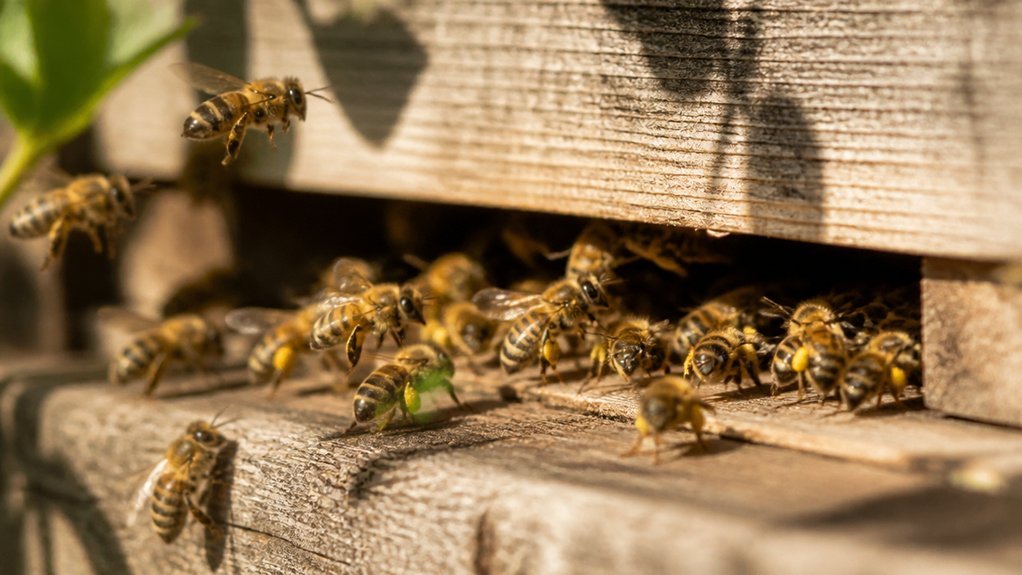
At the hive entrance, you can learn a lot just by watching. Note how many workers come and go, and compare that flow with the weather and time of day. When the colony feels active, you’ll see steady traffic, incoming nectar, and guards checking each visitor. If the line thins suddenly, pause and assess the cause. Watch for bees fanning at the entrance, which can signal ventilation work or nectar processing. Also notice any dead bees, wax debris, or unusual clustering near the opening. These clues help you gauge strength and stress without opening the hive. Stay calm, move slowly, and avoid blocking the flight path. A quick, careful look tells you whether the colony’s daily rhythm seems normal today. Proper entrance sizing and pest control, such as using entrance reducers, can significantly influence bee activity and hive health.
Look for Brood Nest Patterns
Once you’ve noted the traffic at the entrance, open the hive and check the brood nest layout. You should see a compact, organized center of capped brood, eggs, and larvae surrounded by pollen and honey. That pattern tells you the queen is laying steadily and the colony is keeping brood warm and fed.
Look for a solid, circular brood area with few empty cells. Patchy brood, scattered larvae, or irregular gaps can signal problems with the queen, nutrition, or disease. Also note whether frames near the center hold mostly brood or if stores are crowding the nest.
A balanced pattern means the bees are managing space well and the colony’s growth is on track. Compare both sides of the frame, and record anything that looks uneven or unusual.
Watch for Changes in Bee Temperament

As you inspect the hive, pay close attention to how the bees react to your presence and movements. Calm bees usually stay steady on the comb, but restless bees may rush, buzz sharply, or follow you more aggressively.
You can learn a lot by noting whether their response changes after you lift a frame or shift your hands. Small shifts often signal stress, disturbance, or discomfort in the colony.
- Notice how quickly bees take flight.
- Watch for louder, faster buzzing.
- Pause if agitation rises and slow your movements.
If the bees stay composed, you’re probably handling the hive well. If their mood changes fast, adjust your approach, work gently, and give them space.
Check Food Stores and Foraging Patterns
Look for clues about how much food the colony has stored and whether the bees are bringing in enough nectar and pollen. During inspection, check frames for capped honey, fresh nectar, and pollen bands near brood.
Check frames for capped honey, fresh nectar, and pollen bands near brood to gauge colony food stores.
If you see heavy stores, the colony likely has a buffer for bad weather or dearth periods. Thin stores can mean you’ll need to plan feeding or add space for incoming nectar.
Watch the entrance and surrounding area, too. Busy foragers returning with bright pollen loads show active collection, while slow traffic may signal poor flow.
Compare what you see across frames and visits so you can spot trends, not just one-day changes. When stores drop and foraging stays weak, you’ll know to monitor food availability closely and adjust your management.
Additionally, observing probiotics and gut health can help determine the colony’s resilience and readiness to withstand stress from shortages or environmental changes.
What Bee Behavior Says About Hive Health?

Food stores tell you one part of the story, but bee behavior shows how the colony is really coping. When you inspect, watch how bees move, fan, and react to disturbance. Calm, steady activity usually means the hive feels secure and well organized.
If bees rush aimlessly, cluster tightly, or stay unusually quiet, you may be seeing stress, crowding, or poor ventilation. You should also notice guard bees at the entrance; strong, alert guards suggest a healthy defense system. Too much aggression can signal trouble, though.
- Bees fanning at the entrance often mean they’re cooling the hive.
- Loud, erratic buzzing can point to a problem inside.
- A relaxed, even rhythm usually suggests good hive balance.
- Using appropriate hive tools can help you observe and assess these behaviors without disturbing the colony.
Frequently Asked Questions
How Often Should I Inspect My Hive During Peak Season?
You should inspect your hive about every 7 to 10 days during peak season. That lets you catch swarm signs, spot pests, and check brood patterns without disrupting your bees too often.
What Tools Help Me Observe Bees Without Disturbing Them?
You’ll use a hive tool, smoker, veil, and flashlight to observe bees calmly. You can add a camera or observation window, and you should move slowly, keep noise low, and avoid abrupt shadows.
When Is the Best Time of Day to Inspect Foraging Activity?
You’ll usually get the clearest foraging read late morning to early afternoon, when bees are active, temperatures rise, and flowers open fully. Avoid cool dawn or evening, since activity drops and results can mislead you.
How Do Weather Conditions Affect Bee Behavior During Inspections?
Weather shapes how you read bees: warm, calm, sunny days boost foraging and flight, while cold, windy, or rainy conditions reduce activity. You’ll see fewer bees outside, so inspect on stable weather for clearer behavior.
Should I Record Bee Activity Patterns After Every Hive Check?
Yes, you should record bee activity after every hive check so you can spot trends, compare seasonal changes, and catch problems early. You’ll make better decisions, and your inspections’ll become more consistent overall.
In Summary
By watching how your bees move, cluster, and react during inspections, you can spot problems early and support a healthier hive. Pay attention to the entrance, brood pattern, temperament, and food stores, because each clue tells you something important about colony strength. When you stay observant and respond quickly, you’ll give your bees the best chance to thrive. A little careful reading goes a long way toward keeping your hive productive and strong.



