

Winterizing your bees in the fall helps you give the colony the best shot at surviving winter strong and healthy. You reduce drafts, seal gaps, and keep the hive dry so bees don’t waste energy on heat and moisture control. You also add winter feed, check brood and population strength, and remove empty comb to compact the cluster. Good prep now can prevent losses later and show you what to watch for next.
How to Winterize a Hive

As temperatures drop, you need to get your hive ready so your bees can stay warm, dry, and well-fed through winter.
First, reduce draft by sealing gaps, but leave ventilation at the top so moisture can escape. Add insulation around the outside if your climate gets harsh, and keep the entrance clear so bees can fly on mild days. Place a windbreak nearby to cut biting gusts.
Then feed the colony if stores look light, using heavy syrup before freezing weather stops uptake. Swap wet, moldy comb for clean frames, and remove empty supers that create extra space.
Finally, tilt the hive slightly forward so rain and condensation drain out instead of pooling inside. Check wraps and covers often during cold spells. Ensuring proper insulation and weather resistance can greatly improve your hive’s ability to endure winter conditions.
Check Hive Strength Before Cold Hits
Before the cold hits, you should check whether your colony is strong enough to make it through winter. Count the bees in the hive and make sure the population is large enough to keep the cluster warm. Then inspect the brood pattern so you can tell if the queen’s laying is healthy and steady. Ensuring a balanced amino acid profile in your pollen substitutes can also support brood development and bolster colony resilience during the winter months.
Assess Colony Population
How strong is your colony right now? You need enough bees to keep the cluster warm, guard stores, and move together when nights turn cold. Open the hive on a mild day and judge the adult population by frame coverage, not guesswork. If bees cover most frames in two boxes, you’re in good shape. If you see sparse coverage, act early. Monitoring winter preparedness by assessing hive strength is crucial for a healthy season, especially when considering the appropriate hive body setup for your bees.
Verify Brood Pattern
A healthy queen lays in a tight pattern, and you’ll see eggs, larvae, and capped brood in a steady mix. If you find spotty brood, too few young bees, or no recent eggs, act quickly. You may need to requeen, combine weak colonies, or boost nutrition so the hive can build up before winter. Regular seasonal care is essential to ensure the hive remains strong through the cold months. Strong brood now means enough winter bees later, which helps the colony stay warm and survive. Keep notes, because this snapshot helps you judge whether the hive can handle the cold months ahead.
Reduce Drafts and Moisture
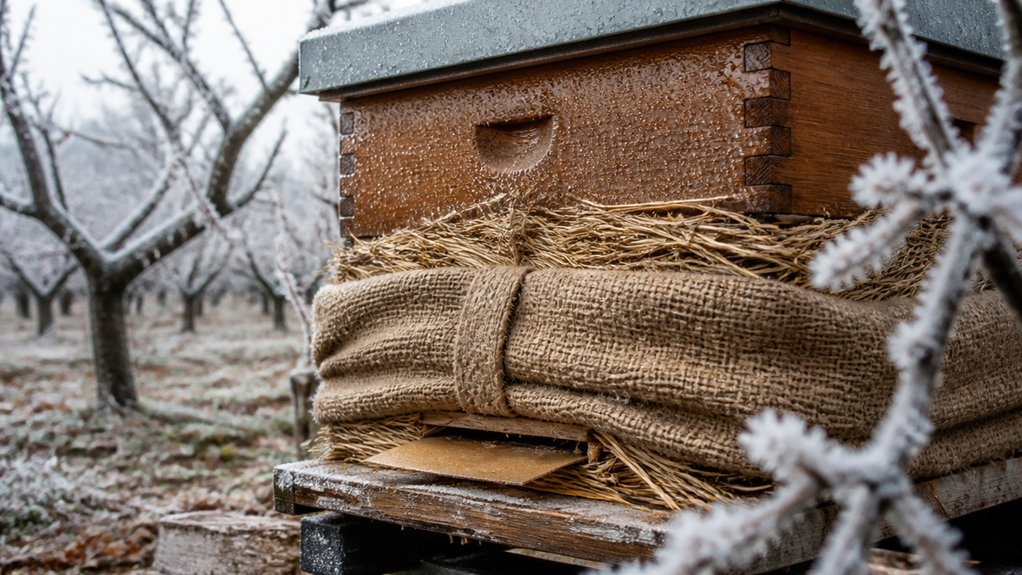
You can keep your bees warmer by blocking cold air gaps around the hive and sealing any loose joints.
At the same time, manage condensation so moisture doesn’t build up and chill the cluster. Provide ventilation that lets damp air escape without sending a direct draft through the hive. Proper inner cover design and placement help maintain the correct bee space and support moisture control, ensuring a healthier winter environment.
Blocking Cold Air Gaps
Cold drafts can stress a hive fast, so seal any gaps around the cover, edges, and joints before winter fully sets in. You should inspect each box and look for cracks where wind can sneak through. Use weatherproof tape, wood shims, or hive-safe caulk to close small openings, and replace warped parts that won’t sit flush.
Check entrances too; you want enough airflow for the colony, but not a path for frigid gusts. Tight joints help your bees conserve energy, stay clustered, and keep their stores for colder days. Incorporating weather resistance features like galvanized steel tops or wax-coated wood can further protect your hive from harsh conditions.
Make sure lids fit snugly after you add insulation or an outer cover. If you’ve got a stack of boxes, align them carefully so the hive stays compact and protected through freezing weather.
Managing Hive Condensation
Even with drafts blocked, moisture can still build up inside a winter hive, so you need to keep the colony warm without trapping damp air. You can limit condensation by insulating the hive walls and top, which helps steady interior temperatures and reduces cold surfaces where water collects.
Add absorbent material above the cluster if needed, and check that inner covers don’t drip back onto the bees. Keep feed and comb dry, because wet stores can chill the colony fast.
When you inspect the hive, look for frost, damp wood, or moldy patches, since these signal excess moisture. Your goal is to protect the bees from cold, wet conditions that sap their strength and raise winter losses.
Ventilation Without Direct Drafts
To keep winter bees healthy, provide just enough ventilation to let damp air escape without creating a direct draft over the cluster. You should aim for slow air exchange, not cold blasts.
If you seal the hive too tightly, moisture builds and chills the bees. If you open it too much, wind strips heat from the cluster. Balance matters.
- Raise the inner cover slightly for gentle top venting.
- Keep lower entrances clear of snow and dead bees.
- Use an upper entrance if your climate stays damp.
- Check that insulation doesn’t block airflow paths.
- Watch for frost, then adjust before the colony weakens.
- Incorporate screened bottom boards to enhance airflow and moisture regulation.
Your goal is simple: dry air out, keep heat in, and protect the cluster from stress.
Add Winter Feed for Energy

As temperatures drop and nectar disappears, you need to make sure your colony has enough stored energy to make it through winter. Add feed before cold weather locks them in, so bees can cluster and stay active without starving. Use the right amount and check stores regularly. Ensuring the fondant has low moisture content helps prevent mold, spoilage, and fermentation, keeping your hive healthier throughout the cold months.
Insulate Without Overheating
A little insulation can help your bees hold heat, but too much can trap moisture and cause more harm than good. You want a balance: steady warmth, good airflow, and a dry cluster.
A little insulation helps bees hold heat, but too much can trap moisture and do more harm than good.
Use insulation to slow heat loss, not seal the hive like a cooler. Check that materials fit snugly without blocking essential spaces, and keep your setup simple so you can monitor it easily.
- Choose breathable insulating wraps.
- Add just enough protection for your climate.
- Leave space for air movement.
- Avoid covering the hive too tightly.
- Recheck insulation after storms.
- Ensure your insulation design maintains temperature stability and prevents moisture buildup.
When you insulate wisely, your bees can conserve energy without overheating or sweating inside the hive.
Block Wind and Pests

Cold wind can strip heat from a hive fast, so you’ll want to break the wind without sealing the bees in. Set the hive where fences, shrubs, or a windbreak can soften harsh gusts, but keep the entrance clear and dry.
You can add a simple guard around exposed sides to reduce drafts without blocking air movement. Check that lids fit snugly and use straps if storms often knock covers loose.
At the same time, stop mice, woodpeckers, and other pests from moving in. Use an entrance reducer or pest guard sized for your colony, and inspect for gaps around boxes and covers. If you see chewing, scratching, or droppings, act quickly so intruders don’t stress the bees.
Proper entrance protection is essential for maintaining hive security and healthy winter survival.
Remove Dead Comb and Compact the Hive
After the last honey is off and the weather turns, you should remove any dead comb, burr comb, or empty frames the bees won’t need through winter. Trim the hive down so the colony can heat fewer spaces and stay more organized.
Keep only sound comb with stored food and brood where it belongs. Clean out wax scraps, dead bees, and debris, then center the cluster’s usable frames together. A tighter hive helps your bees move efficiently and conserve energy as temperatures fall.
- Lift out broken comb
- Scrape excess burr comb
- Remove unused frames
- Keep solid food stores
- Reassemble frames snugly
Monitor Hive Condition During Storms

When storms hit, check your hive for signs of trouble without opening it up unless conditions are safe. Look for tilted boxes, loose lids, wind damage, or snow piling against the entrance.
You can also watch flight activity on calmer breaks; a sudden drop may mean the colony needs help. Keep the landing area clear so bees can move in and out when weather improves.
If rain or ice drives water toward the stand, improve drainage quickly and secure straps or weights before the next front arrives. After the storm passes, inspect the exterior for cracks, shifted components, or chewed insulation.
Frequently Asked Questions
When Should I Start Winterizing Bees in My Region?
Start winterizing when nighttime temperatures consistently dip below 50°F and your bees stop heavy foraging, usually 4–6 weeks before first hard frost. Check local forecasts, then reduce entrances, add insulation, and guarantee enough stores.
Which Bee Species Handle Winter Best?
Honey bees usually handle winter best, especially European honey bees. You’ll also find some bumblebees survive cold well. Your local climate matters, so choose hardy stock and prepare colonies to keep them strong.
How Much Honey Should a Colony Retain for Winter?
You should leave about 60 to 90 pounds of honey for a typical colony, depending on your climate and hive size. Check stores in fall, then add feed if they’re light before winter arrives.
Do I Need Special Equipment for Winter Hive Care?
Yes, you’ll likely need a few basics: an insulated hive wrap, entrance reducer, windbreak, and moisture control. You don’t need fancy gear, but you do need tools that keep your bees dry, warm, and ventilated.
Can I Winterize Multiple Hives Differently?
Yes, you can winterize each hive differently. You’ll want to assess colony strength, food stores, and exposure, then adjust insulation, ventilation, and wind protection for every hive so they’ve got the best chance.
In Summary
Winterizing your bees this fall helps them survive the cold with less stress and better chances of making it to spring. When you check hive strength, cut drafts, add feed, and manage moisture, you give your colony the support it needs to stay warm and healthy. A compact, well-protected hive can handle winter far better than a neglected one, so take the time now to prepare and protect your bees before the temperature drops.



